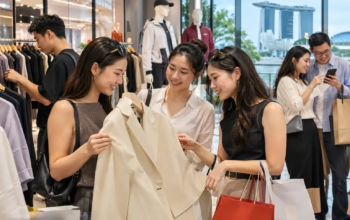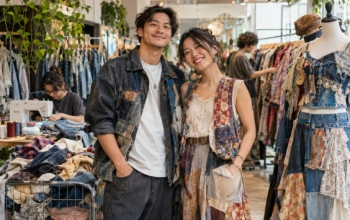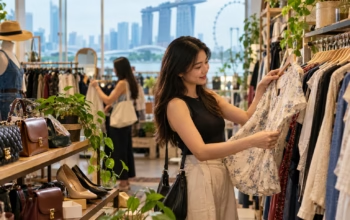
Walk through the Design Orchard retail space in mid-2026 and the visual language of sustainable fashion is unmistakable: muted tones, natural textures, educational placards. But the substance of Singapore’s eco-fashion transition lies not in the aesthetics of its retail displays, but in the unglamorous question of what happens to a garment after its useful life ends.
Denim as the Entering Wedge
The Singapore Fashion Council’s decision to dedicate the first year of its IMPACT Retail programme to denim was not arbitrary. Denim production is resource-intensive—water consumption, chemical dyes, and cotton cultivation all carry significant environmental burdens—yet it is also one of the most familiar and emotionally durable categories in the average wardrobe. By focusing public attention on a single material, the programme attempts to make abstract circularity concepts concrete .
The eight local labels participating in the 2026 responsible retail showcase—including Sukkha Citta, As Intended, and SABRINAGOH—represent a spectrum of approaches. Some prioritize certified organic or recycled fibres; others emphasize small-batch production and artisanal supply chains. What unites them is a willingness to subject their material claims to public scrutiny within a government-funded framework, a level of transparency that fast fashion rarely invites.
The Recycling Research Imperative
The commercial showcase, however, sits downstream of a harder problem. Singapore’s Minister for Sustainability and the Environment acknowledged in a September 2026 parliamentary reply that most textiles collected through recycling channels are resold or reused in overseas markets “given the lack of local capacity to process textile waste” . The ministry stated it will continue to monitor recycling technologies and assess the need for domestic capacity, but no timeline for building such capacity was provided.
The research gap is being addressed, at least in part, by the RGE-NTU Sustainable Textile Research Centre. Established with S$6 million in funding from RGE and hosted at Nanyang Technological University, the centre is developing technologies for fibre recovery, regeneration, and eco-friendly decolorization intended for urban deployment . Its mission explicitly references the Singapore Green Plan 2030’s Zero Waste vision, positioning textile circularity as a national infrastructure priority rather than a niche academic pursuit.
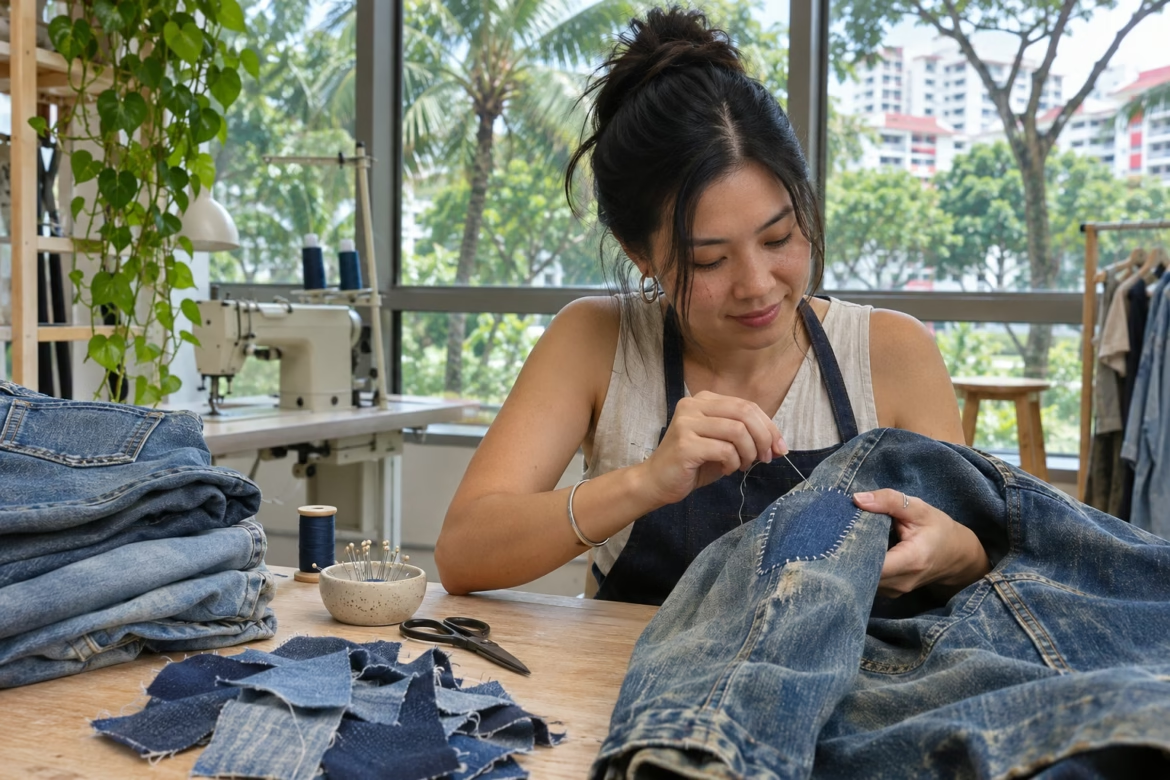
Yet the distance between laboratory innovation and commercial-scale recycling remains substantial. The centre’s five-year research timeline suggests that domestically processed recycled fibres are unlikely to become a meaningful input for local fashion brands before the late 2020s. In the interim, brands committed to circularity must rely on imported recycled materials or design around mechanical upcycling—cutting and resewing existing garments rather than chemically breaking them down.
The Consumer Education Layer
Bridging the gap between material innovation and consumer behavior is a third pillar of the 2026 ecosystem. The IMPACT Retail programme includes a “Train-the-Trainer” component designed to equip educators and community leaders with the knowledge to teach circular fashion principles in schools and grassroots settings . Separately, social enterprises like Cloop run behind-the-scenes tours of their textile processing facilities, where participants learn what happens after they deposit clothes in a recycling bin and practice turning old T-shirts into fabric twine .
These efforts matter because the economics of circular fashion depend on consumer willingness to participate in collection and resale systems. Singapore’s network of textile collection points—over 400 locations listed on the government recycling portal—provides the physical infrastructure . But infrastructure without habit is inert. The educational programming represents an attempt to convert convenience into routine.
What the Material Focus Obscures
The emphasis on fibres and recycling technologies, while necessary, risks overshadowing the most impactful intervention available to the fashion industry: producing fewer garments. A 2026 controversy involving ultra-fast-fashion retailer Shein illustrated the tension. When Shein approached Cloop to donate unsold marketing samples, Cloop declined, stating that accepting poorly made garments it could not resell would amount to becoming a “dumping ground” . The refusal was notable not for its drama but for its clarity: circular systems cannot absorb the output of linear business models.
The material innovations underway at NTU and the retail experiments at Design Orchard are meaningful steps. But they operate within a system that still rewards volume over durability. Until the economics of production align with the physics of material recovery, Singapore’s sustainable fashion transition will remain partial—impressive in its technical ambition, incomplete in its industrial logic.