The Curated Womenswear Bet: Why a Guangzhou Fashion Group Chose Singapore as Its First Overseas Test
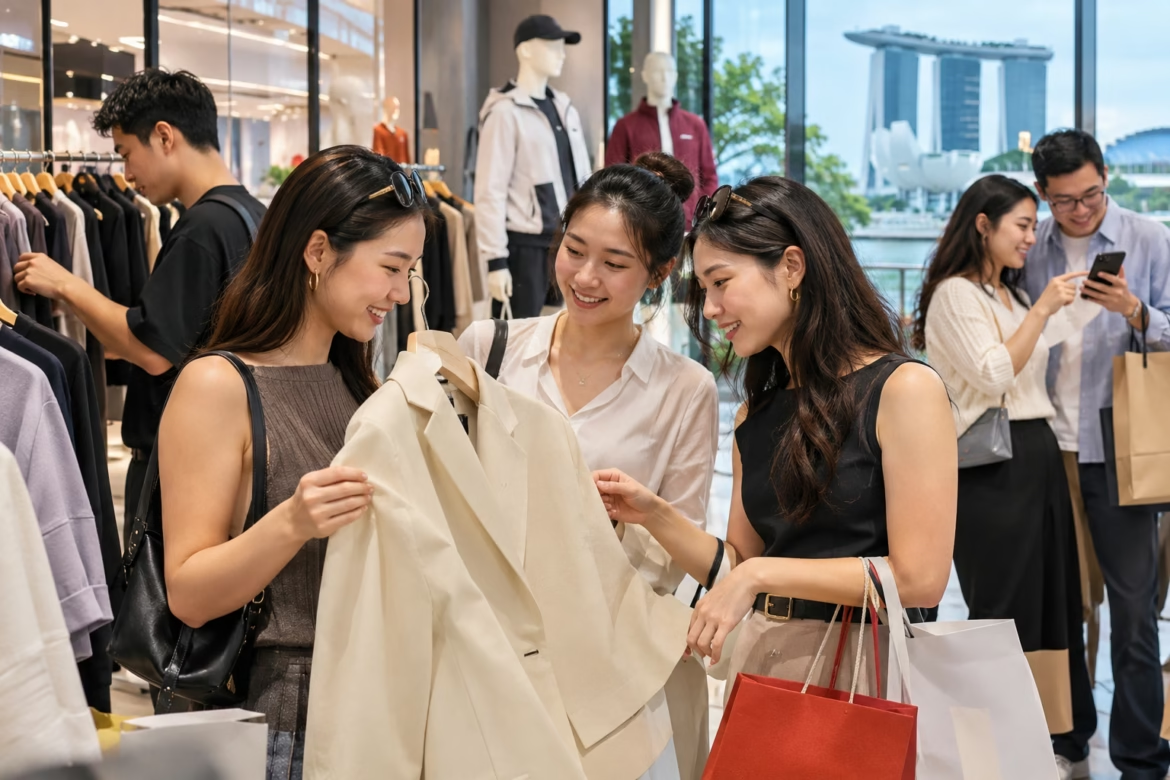
Singapore’s premium womenswear market has long been described as polarised: European luxury at the top, fast fashion at the bottom, and a comparatively thin middle where contemporary, design-led labels can build a loyal following without competing on logo prestige. That gap is precisely where EPO Fashion Group, the Guangzhou-based owner of Edition and Mo&Co, has chosen to plant its first independent Southeast Asian stores. In November 2025, Edition opened a 1,216-square-foot boutique at Raffles City, alongside Mo&Co’s first Singapore store, with a second Mo&Co outlet following at Jewel Changi Airport. The decision is not a scattergun global push. It is a deliberate, data-informed entry into what the company’s 37-year-old group CEO, Jin Chenhao, calls “a small but sophisticated market” with a stable high-net-worth clientele and a cultural make-up that aligns with the brands’ “Oriental gene, global expression” design philosophy.
Why Singapore Before Europe or Japan
EPO’s choice of Singapore as its first overseas market outside China, Hong Kong and Macau is a counterintuitive one for a fashion group with more than 1,000 stores across its portfolio. The conventional route for Chinese fashion brands seeking international credibility has been Paris, Milan or Tokyo—markets where visibility can translate into global wholesale interest. EPO instead prioritised operational learning over prestige. Singapore offers predictable consumer behaviour, strong mall infrastructure, international foot traffic and a majority Chinese ethnic population that reduces the cultural distance for a brand whose design language draws on Eastern aesthetics. The company spent over a year studying how Singaporean women shop and approach premium fashion, including a shop-in-shop test at Takashimaya Department Store before committing to standalone boutiques. That sequencing—test, learn, then lease—reflects a level of operational maturity that earlier generations of Chinese fashion exporters often lacked.
The Product Adaptation Equation
Edition’s Singapore assortment is not a copy-paste of its mainland range. The brand has leaned into two complementary lines: an Elite Wardrobe series of streamlined professional attire for working women, and an E+ Light Life casual range built around breathable, low-maintenance fabrics. The materials list reads like a response to a climate brief: silk, linen, island cotton for outdoor humidity; merino wool and Italian air cashmere for air-conditioned interiors. Price positioning sits in the premium contemporary bracket—S$250 for a top, S$375 for a dress, S$560 for a blazer—placing it above mass-market Chinese brands but below European luxury. That is a narrow but underserved corridor. The question is whether Singaporean shoppers will treat a Chinese-origin label as a credible premium choice at those price points, or whether the “Chinese brand” signal still carries a value-for-money connotation that works against higher-ticket purchases.
The Brand-Awareness Reality Check
The latest consumer data suggests that awareness is not the bottleneck—consideration is. A 2026 survey of 1,000 Singapore residents by Lianhe Zaobao found that 91% reported stable or improved favourability toward Chinese brands, and 66% associated them with value for money. But in the apparel category, awareness drops sharply for premium Chinese fashion labels: while Shein registers 83% recognition, Mo&Co sits at just 6%. That gap is both a warning and an opportunity. It means Edition and Mo&Co cannot rely on country-of-origin curiosity; they must build brand meaning through store experience, service and consistent product quality. EPO’s CEO acknowledges this, framing the physical store as a way to convert Taobao-accustomed shoppers by offering curated styling and personal service that e-commerce cannot replicate.
The Landlord Calculus and the Middle-Market Window
Singapore landlords have become more receptive to Chinese fashion concepts as they seek tenant diversity and footfall in a post-pandemic retail rebalancing. That openness gives brands like Edition access to prime locations that would have been harder to secure a decade ago. But access is not the same as endurance. The premium middle is a demanding place to operate: it requires consistent seasonal storytelling, inventory depth and a service culture that justifies the price gap over fast fashion. EPO’s bet is that Singapore’s sophistication—its high concentration of global luxury brands and experienced shoppers—will reward a carefully curated, climate-adapted womenswear offer. Whether that bet pays off will be watched closely by every Chinese fashion label eyeing the city-state as a regional springboard.