A Brand Born From Fast Fashion’s Waste Problem
Syne Studio’s founders did not enter sustainable fashion through idealism. Eshton Chua and Suffian Samat had worked inside fast fashion and witnessed the volume of off-season and damaged stock that companies struggled to donate or repurpose. That experience led them to build a label that treats excess inventory as raw material, launching Syne Studio in 2020 with a specific focus: unwanted kimonos from Japan.
Why the Kimono Is a Circular Design Case Study
The kimono is not merely a culturally resonant choice; it is structurally suited to reworking. Traditional hand-sewn kimonos are constructed from six pieces of fabric of identical width, cut horizontally from a bolt — a method that produces no offcuts or fabric wastage. The panel-based construction also makes the garment easy to dismantle, whether for restoration or reinvention. In other words, the kimono already embodies the zero-waste logic that contemporary circular fashion often struggles to retrofit onto modern garments.
Pricing Craft, Not Discounting Sustainability
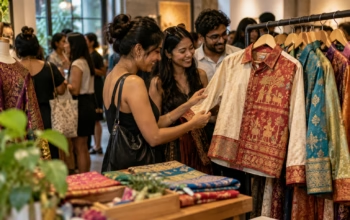
Syne Studio’s kimonos are priced from S$180, positioning the brand in the accessible premium segment rather than the bargain bin of secondhand retail. That pricing reflects labour and material integrity: only traditional, hand-sewn kimonos make the cut, and the restoration process preserves the garment’s existing construction wherever possible. The brand also taps a stylistic gap — reintroducing Asian silhouettes into outerwear and layering for consumers who want cultural specificity without costume. The founders’ own histories explain the instinct: one collected vintage kimonos, the other sought ways to fold Asian styles into streetwear.
The Surplus Is the Supply Chain
Japan’s kimono surplus exists because contemporary dress overtook traditional wear in everyday life, leaving large volumes of high-quality garments without a domestic use case. Syne Studio’s model converts that cultural surplus into a cross-border circular supply chain, with Singapore as the design and market hub. This is a different kind of “local” fashion: the material is imported, but the value addition — restoration, sizing, styling, storytelling — happens in Singapore. For a city-state with limited textile manufacturing, that value-added positioning is strategically coherent.
What This Means for Reworked Fashion’s Next Phase
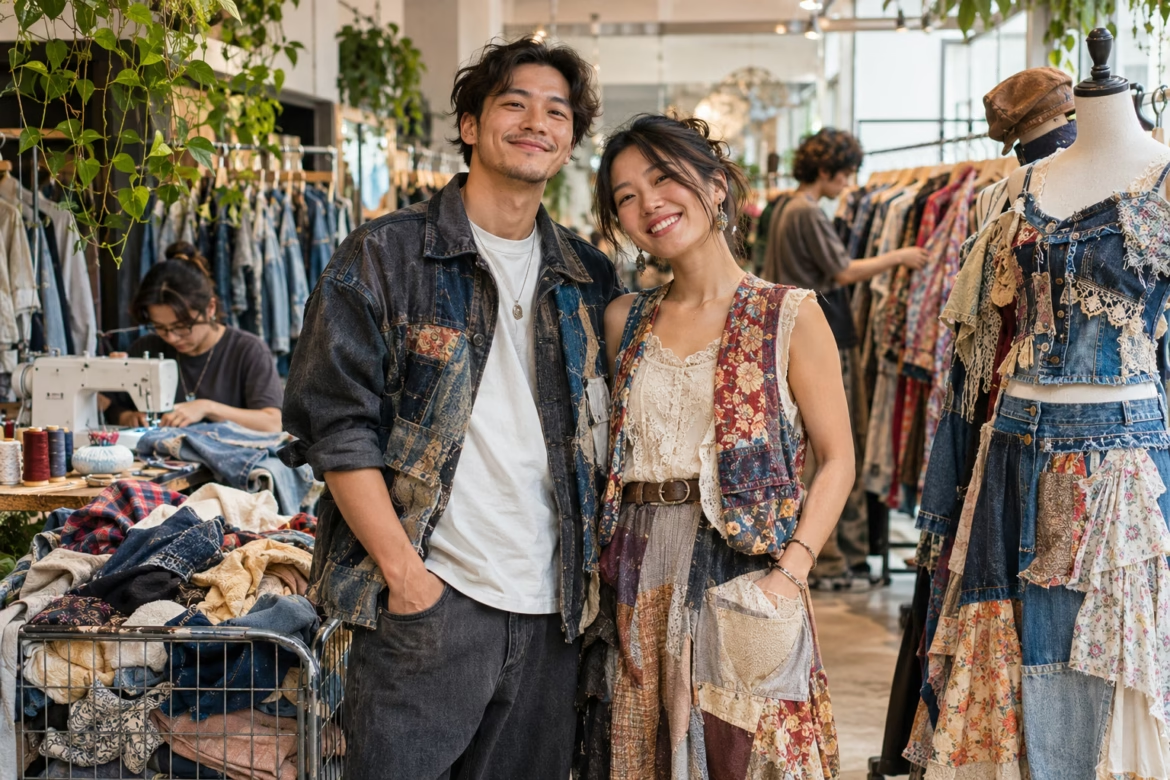
Syne Studio demonstrates that reworked fashion does not have to be rustic or visibly “mended.” The brand’s proposition is not repair for its own sake but restoration as design. That distinction matters in a market where sustainability is increasingly table stakes and aesthetics remain the primary purchase driver. The kimono’s straight-line construction gives Syne Studio a formal language that can sit alongside contemporary wardrobes without explanation — a quiet advantage over upcycled pieces that rely on patchwork or overt deconstruction.