From hangover to endorphin: the rise of the fitness rave
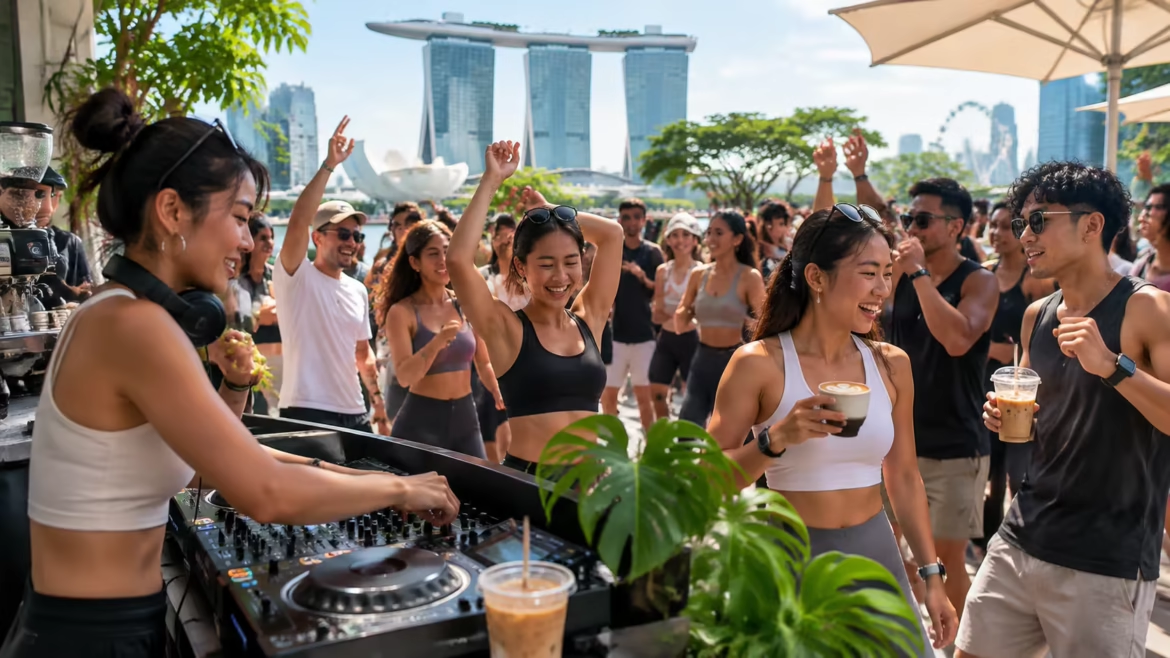
The most visible evolution of Singapore’s daytime party scene is not simply the removal of alcohol—it is the insertion of structured movement. The Breakfast Club’s 2026 New Year edition, held on 24 January at SALT Fitness, was explicitly fitness-themed: attendees could add a rhythm-based spin class set to 2000s club hits or a strength session to their morning rave ticket. The event ran from 9 a.m. to 1 p.m., with every ticket including a specialty coffee or matcha on arrival.
This is a deliberate repositioning of the rave as a “third space” that competes not with nightclubs but with the gym, the brunch slot, and the wellness retreat. AsiaOne’s first-person account of the January 2026 edition describes a room that began with shy attendees making custom keychains at a “Word of the Year” booth, then filled with people singing along to Korean R&B and moving through a 45-minute spin class before refuelling on overnight oats.
The operational logic of combining fitness and music
For organisers, the fitness layer solves two problems. First, it provides a clear reason to dance without alcohol: the body is already in motion, and the social permission to move is built into the format. Second, it creates a multi-touchpoint event that can monetise beyond the ticket—through class add-ons, wellness pop-ups, and brand collaborations with fitness studios.
Joshua Yap, founder of Conscious Clubbing, which launched in September 2025, encountered initial scepticism from the fitness community but has seen retention build around a simple proposition: make exercise less intimidating by introducing music, community, and social drinks. His events run in the late afternoon and end in the evening, occupying a slot between the workday and the traditional night out.
Matcha, mocktails, and the sensory redesign of sobriety
The beverage programme is central, not incidental. Sober raves in Singapore have moved beyond generic soft drinks into curated matcha bars, cold brew stations, and mocktail menus that signal intentionality rather than deprivation. At Beans&Beats’ dim sum-meets-techno event, specialty coffee replaced vodka sodas, and the dance floor was fuelled by caffeine rather than ethanol. Vogue Singapore’s June 2026 feature describes the broader scene as one where “pilates is networking” and “matcha is a stimulant,” with wellness rituals—hot pilates, sound baths, ice baths—serving as social infrastructure rather than solitary routines.
The Wellness Morning Rave & Breakfast at Alani Rooftop has been scheduled for multiple 2026 dates, including 5 September and 17 October, running from 8:30 a.m. and starting “on time”—a scheduling discipline that reflects the format’s integration into daytime wellness routines rather than late-night leisure.