SHATEC, established as one of Singapore’s most recognised hospitality education institutions, has built its culinary reputation on a simple structural advantage: its programmes are designed backward from employer requirements. The International Diploma in Culinary Arts, registered for the period ending 15 August 2026, exemplifies this employer-first logic.
Curriculum Built with Industry Input
The diploma covers Asian, Western, and specialty cuisines, but its distinguishing feature is the integration of modules that address operational realities beyond cooking technique. Students study food sustainability, F&B cost control, food production management, and e-commerce for hospitality professionals. These are not elective add-ons; they are core components assessed within the diploma structure.
The inclusion of “Food Sustainability” as a named module reflects a broader shift in Singapore’s culinary education market. As F&B operators face increasing pressure on ingredient sourcing and waste reduction, schools that embed sustainability into credential-bearing programmes give graduates a practical edge in hiring conversations.
The Six-Month Industrial Attachment
SHATEC’s programme structure includes a six-month industrial attachment, described in the programme documentation as the mechanism through which classroom skills are tested against operational reality. This is longer than many short-course attachments and signals that the institution treats workplace immersion as a substantive component of qualification, not a brief exposure.
The attachment is supported by SHATEC’s alumni network of over 40,000 professionals across more than 60 countries, which provides placement pathways in hotels, restaurants, and catering operations both in Singapore and internationally.
The Sapling: On-Campus Practicum
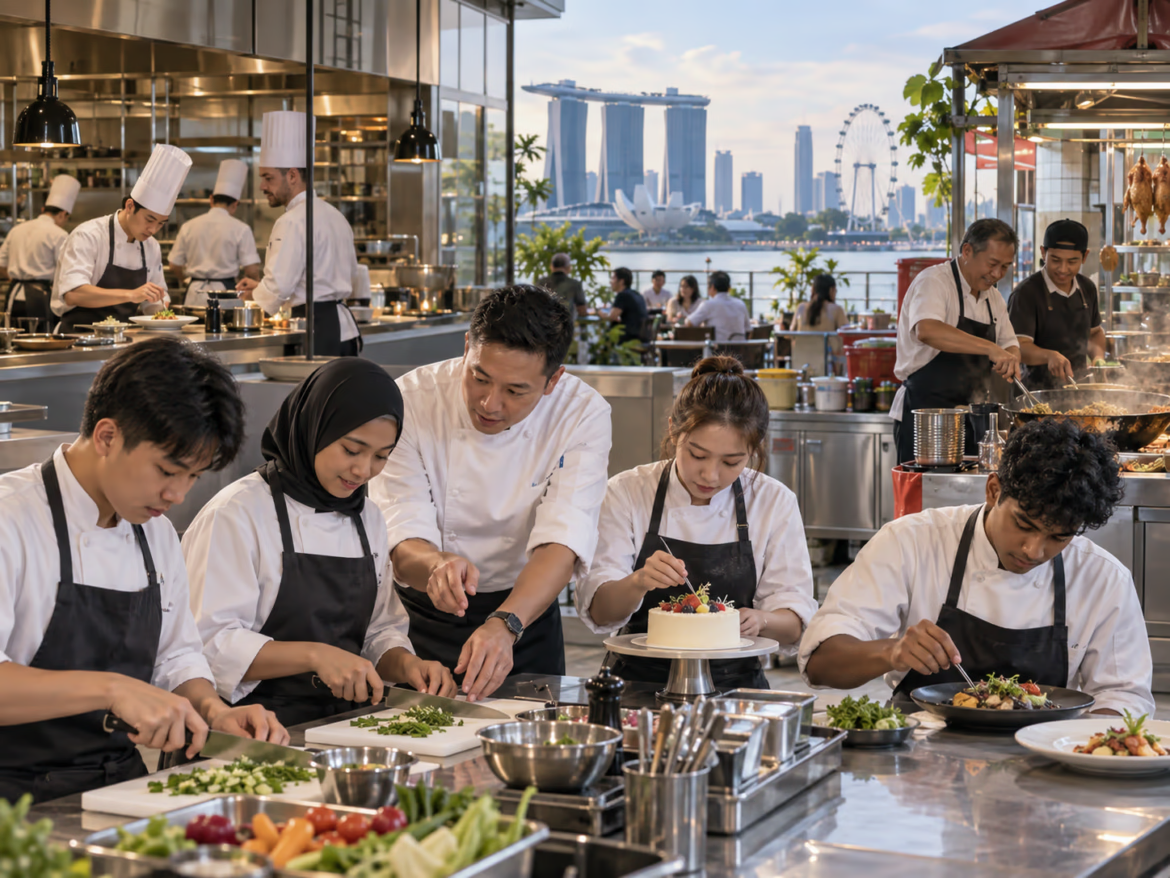
Before external attachment, SHATEC students complete a practicum at The Sapling, the institution’s on-campus training restaurant and kitchen facility. The Sapling functions as an intensive practical training ground where culinary, pastry, and F&B management students rotate through production and service roles under supervision. This intermediate stage reduces the adjustment burden when students enter external kitchens and allows employers to receive interns who already understand kitchen hierarchy and service rhythm.
Fees and Funding
SHATEC’s International Diploma in Culinary Arts carries a tuition of approximately S$10,900, with intakes in February, May, and September and a total duration of 18 months including the attachment period. Singapore citizens and permanent residents may access SkillsFuture Credits and, where applicable, Union Training Assistance Programme benefits to offset costs. The institution also offers WSQ-accredited pathways, including a Higher Certificate in Culinary Arts awarded under the SkillsFuture Singapore framework.
For mid-career entrants, SHATEC offers a Diploma in Culinary Skills designed for early to mid-career professionals, with a duration of 26 months or 8.5 months with approved exemptions. This flexibility matters in a labour market where career conversion programmes increasingly fund culinary retraining for workers transitioning from other sectors.
SHATEC’s model is straightforward: credential-bearing programmes, structured workplace immersion, and a curriculum that explicitly names the non-cooking competencies employers require. The result is a pipeline of graduates who are not surprised by the commercial realities of a professional kitchen.