The Numbers Behind the Shift
Singapore’s plant-based food market crossed an estimated S$180 million in retail sales in 2025 and is projected to reach S$260 million by 2028, according to the Singapore Food Agency’s industry outlook report cited by SG Vegan Community. Plant-based products now account for 4.8% of total protein food sales at major supermarkets, up from 1.2% in 2020. The story is no longer about niche restaurants. It is about shelf space, supply chains, and public infrastructure.
NEA’s Hawker Development Programme
The most consequential development for hawker food is the National Environment Agency’s Hawker Development Programme, which has funded 15 hawker stalls transitioning to hybrid or full plant-based menus since 2024. The programme extends access beyond middle-class dining enclaves, bringing plant-based versions of local classics into the heart of Singapore’s public dining system. The NEA and SkillsFuture Singapore jointly developed the programme to equip aspiring and existing hawkers with the skills to run sustainable businesses, and it remains under review to ensure relevance.
From Hawker Centre to Hospital Ward
Institutional adoption is accelerating alongside hawker-level change. Temasek Polytechnic’s canteen introduced a permanent plant-based daily special in 2025. Singapore General Hospital now offers plant-based meal options on every ward menu as a standard choice. These are not marketing gestures. They are procurement decisions that normalise plant-based eating across the life of the city—from the lunch queue to the hospital bed.
What This Means for the Hawker Centre
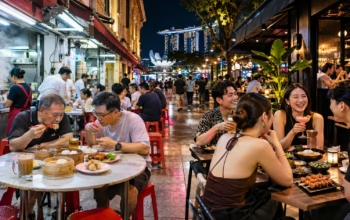
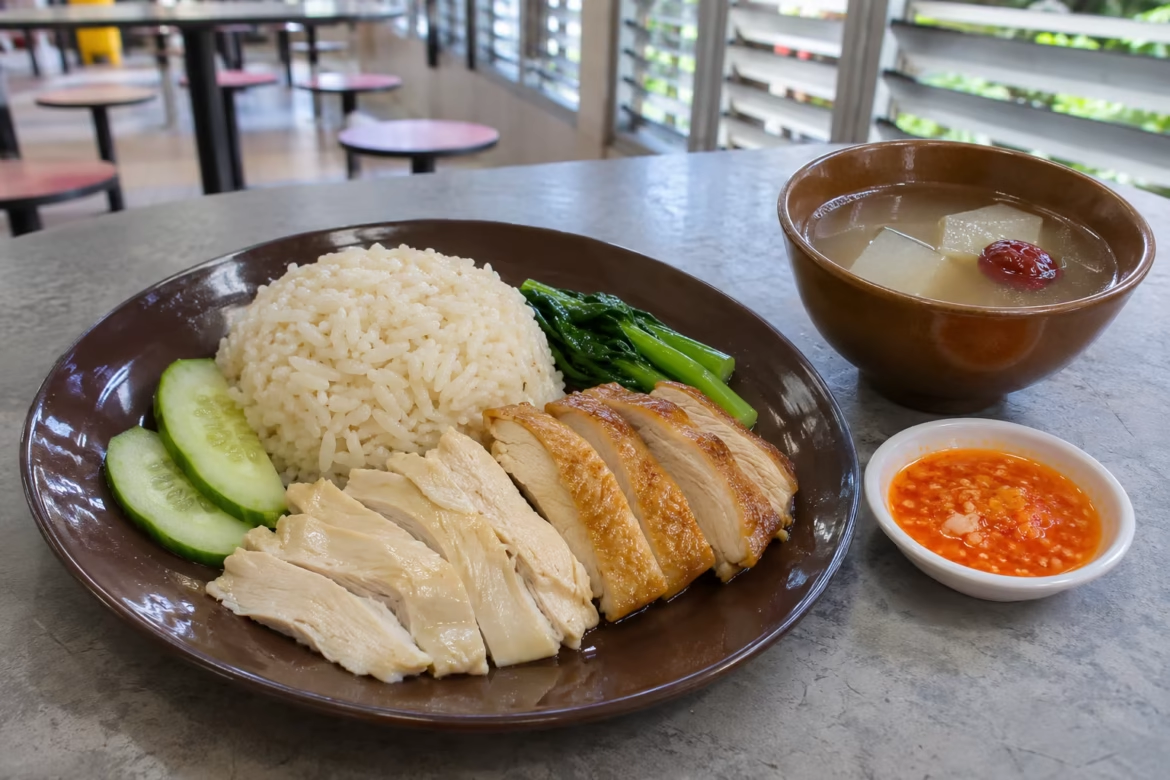
The hawker centre has always been Singapore’s most democratic food institution: cheap, fast, and shared across class and generation. When plant-based options enter that space, they do not arrive as luxury goods. They arrive as $4.50 plates of chicken rice and $5 bowls of curry noodles. That price point matters more than any restaurant opening. It determines whether plant-based eating remains a middle-class experiment or becomes part of the everyday menu. The market data suggests the latter is now within reach.