Singapore still calls itself a city that never sleeps, but the receipts tell a more complicated story. The all-night eatery — once a civic institution rather than a business model — is becoming harder to find. What has replaced it is not emptiness. It is a leaner, more fragmented, and more digitally mediated late-night food economy.
The Retreat of the Round-the-Clock Kitchen
The most visible shift is the shrinking footprint of true 24-hour operations. Nana Original Thai Food, a long-time supper stalwart with former 24/7 outlets in Clementi and Kallang, now closes between 9:30pm and 4am, a decision driven by footfall that has fallen by around half. Even The Gogijip in Tanjong Pagar, one of the last institutions standing until 6am, has started closing at 3am on Tuesday mornings to give staff rest and manage costs. Maintaining round-the-clock service carries higher labour, utility, and maintenance costs, and operators are reviewing whether the demand justifies the expense.
The Infrastructure Tells the Story
The retreat is not only commercial. SMRT’s Night Rider bus service clocked its last shift in 2022, and liquor licensing hours — shortened in 2013 — have only been tentatively extended to 4am in Boat Quay and Clarke Quay as part of a year-long trial. A late-night city needs late-night transport and permissive regulation. When both thin out, the supper economy feels it first.
Delivery Apps Fill the Gap — Unevenly
The digital layer has absorbed some of the loss. GrabFood runs deliveries as late as 2am depending on the area, and platforms now list 24-hour merchants and dedicated late-night hubs. But app availability is not the same as a staffed kitchen: a merchant listed at 3am may not be open, and the late-night delivery map is patchy. Foodpanda is often cited as having broad late-night coverage, but coverage is not the same as choice.
What Actually Survives
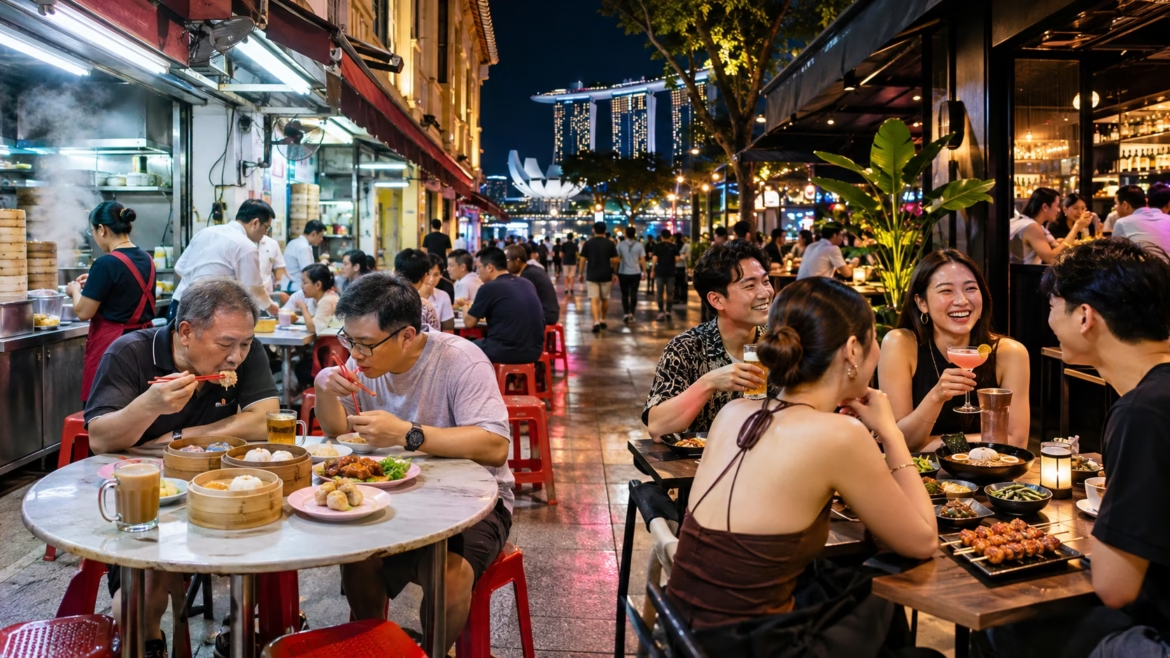
What survives is a smaller, more deliberate late-night estate: hawker centres with 24-hour access such as Lau Pa Sat and Chinatown Complex, a cluster of Geylang and Jalan Besar stalwarts, and a new wave of bar-adjacent kitchens that open specifically for the post-drinks crowd. The 24-hour city has not vanished. It has been selectively preserved, concentrated in nodes where demand is dense enough to justify the cost. The myth of universal all-night access is being replaced by a more honest map of where the lights actually stay on.