The Counter as Theatre
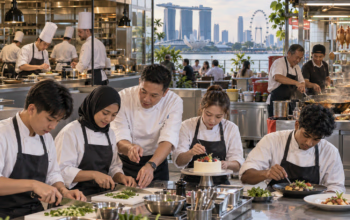
At Asin, the seat matters as much as the menu. The restaurant, tucked along Carpenter Street, is built around a curved ten-seater counter, with a semi-private table for four and a private room for eight. Counter seating is not a consolation prize here; it is the point. From the counter, diners watch Chef Ace Tan and his team plate, grill and finish each course at arm’s length. The kitchen becomes a stage, and the meal becomes a performance that unfolds in real time. That format has become one of the defining characteristics of Singapore’s chef’s table culture in 2026: the most decorated rooms in the city are increasingly built around the chef’s hands rather than a distant pass, and counter seats often release separately from tables, requiring a specific request rather than a default reservation. Asin leans into that logic without the white-tablecloth formality that can make counter dining feel stiff.
Seasonal Storytelling Through Five Elements
Asin’s dinner tasting menu, priced at S$188++ per person, is a continuation of Tan’s progressive Asian cuisine philosophy, tying four seasons and five elements together and presenting them in Singapore. The menu changes with the season, and the room itself carries seasonal cues: a tree installation at the centre of the restaurant changes with the menus, and a large artwork by Tan’s partner depicts animals that appear on the current menu, turning the dining room into a kind of treasure map for the courses ahead. During a summer visit, the meal opened with a deconstructed oyster omelette fashioned as a delicate sphere topped with egg floss, chilli holy basil sauce and garlic chive flower, followed by a tori luffa bao packed with braised chicken and cubed luffa gourd, and an assam tomato hamo that stood out for its balance of acidity and depth. The experience runs about two and a half hours, and the pacing never feels sluggish because each course is tied to a narrative rather than a fixed menu template.
A Zen Space in Carpenter Street
Asin opened quietly in 2026 after Tan’s previous venture, Asu at Labrador Nature Reserve, shuttered at the end of the previous year. The new space is intentionally understated: dark browns and neutrals, a zen-minimalist layout, and a location that rewards diners who are actively looking for it. That low-key setting is part of the proposition. In a city where fine dining can feel like a red-carpet event, Asin offers something closer to a private studio visit. The chef is present, the seasonal ingredients are visible in the room’s design, and the counter format keeps the meal conversational rather than ceremonial. For diners who want intimacy without austerity, Asin is one of the clearest expressions of where Singapore’s chef’s table scene is heading in 2026: smaller rooms, stronger seasonal identities and a direct line between the chef’s philosophy and the diner’s plate.