Health-conscious eating has moved into the bakery. In 2026, Singapore’s premium bakeries are not just selling indulgence; they are selling functional benefits. From high-fibre sourdough to vegan viennoiserie and reduced-sugar celebration cakes, the market is being reshaped by consumers who want both pleasure and wellness.
The Health-Conscious Consumer Shift
Singapore’s health awareness has been rising due to government campaigns and an ageing population. Shoppers now read ingredient labels more carefully. They seek whole grains, natural fermentation, and less sugar. Premium bakeries have responded by reformulating classic recipes. A croissant made with plant-based butter and unrefined sugar may still be a treat, but it carries a wellness halo.
Functional Ingredients Take Center Stage
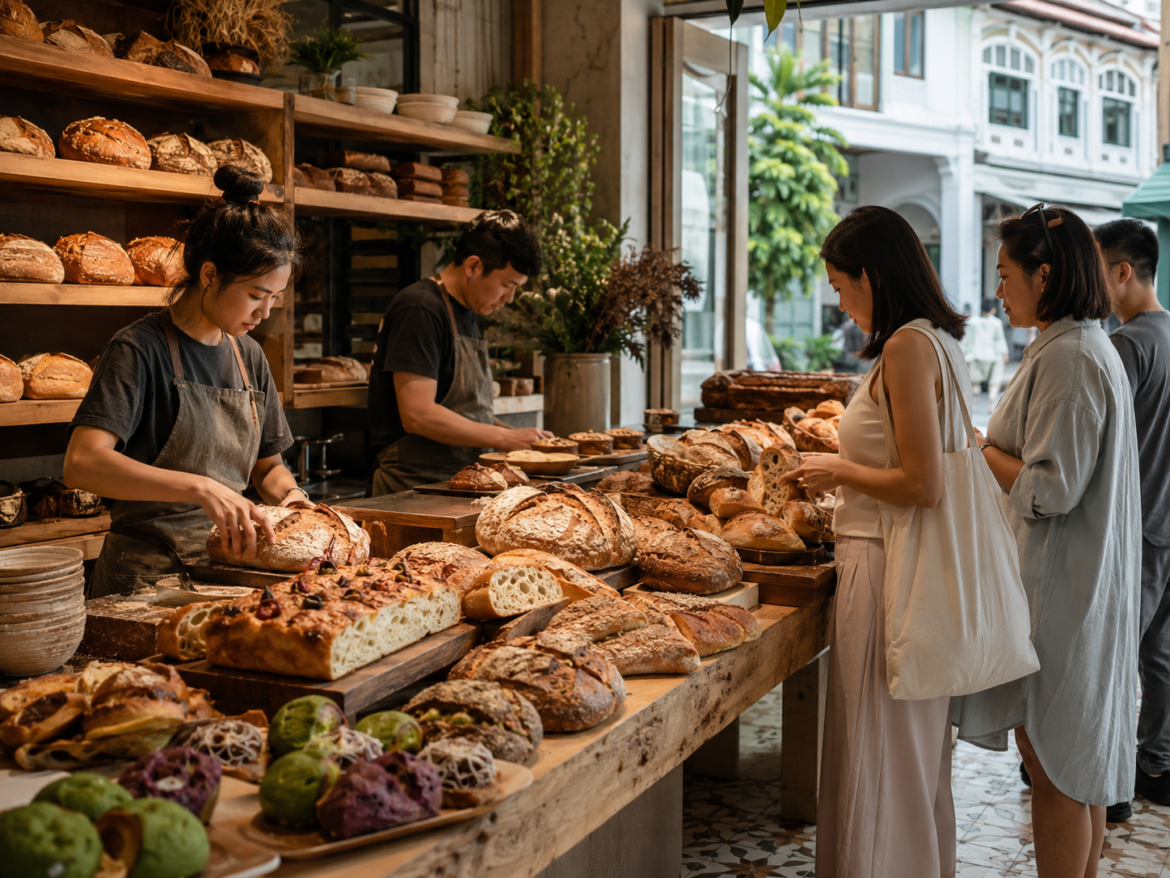
Bakers are incorporating ingredients such as spelt, rye, chia, flaxseed, and psyllium husk into breads and pastries. Some use sourdough fermentation to improve digestibility and nutrient absorption. Others highlight natural colourings from beetroot, matcha, and spirulina instead of artificial dyes. These functional ingredients allow premium bakeries to charge higher prices while appealing to customers with specific dietary needs.
Marketing Premium Wellness
The language of wellness has become central to bakery branding. Terms like “slow-fermented,” “plant-based,” “no refined sugar,” and “gut-friendly” appear on menus and packaging. Some bakeries partner with nutritionists or display nutritional panels prominently. This transparency builds trust and differentiates premium products from mass-market bread. In Singapore’s competitive food scene, a clear wellness story can justify a price difference of 30 to 50 percent.
Data and Regulatory Support
Singapore’s Health Promotion Board has run the Healthier Dining Programme to encourage foodservice operators to offer lower-sugar and wholemeal options, detailed on HealthHub (HealthHub Healthier Dining Programme). While not all premium bakeries are formally part of the programme, many align their product development with its guidelines. This regulatory nudge, combined with consumer demand, has accelerated the availability of healthier premium baked goods.
Challenges in Reformulation
Creating a premium pastry with less sugar and plant-based fats is not easy. Sugar affects moisture, browning, and shelf life; butter creates flakiness and mouthfeel. Bakers must test extensively to maintain texture. Some use natural sweeteners like monk fruit, allulose, or coconut sugar, but these can alter flavour. The result is often a slightly different product that still satisfies cravings. Successful bakeries are transparent about these trade-offs, educating customers rather than hiding them.
Future Directions
The next frontier includes high-protein breads for active lifestyles, low-glycaemic cakes for diabetics, and allergen-free bakeries that cater to multiple restrictions at once. Bakeries such as The Whole Kitchen and WellSmoocht have already carved out niches in gluten-free and vegan markets, showing that premium wellness can be commercially viable. As Singapore’s population becomes more health literate, the premium bakery sector is likely to segment further. A single shop may offer classic indulgent pastries alongside functional options, creating a broader customer base without diluting its brand.