The Unlikely Marriage of Italian Craft and Singaporean Grit
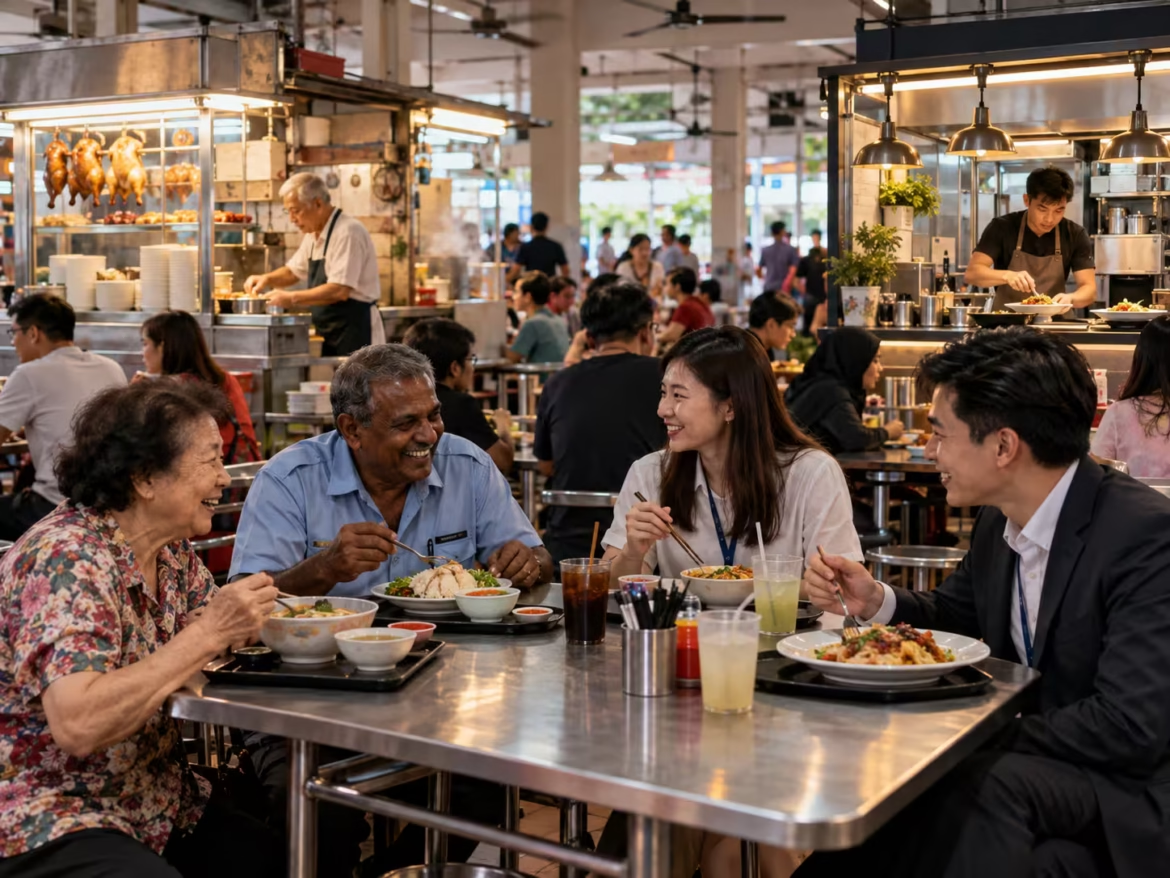
In the labyrinthine aisles of North Bridge Road Market & Food Centre, where legacy stalls have served prawn noodles and carrot cake for decades, a quiet revolution is simmering. Ducoo, a pasta stall opened by two young chefs, represents a growing phenomenon: the neo-hawker movement. Here, diners can order Tagliatelle Bolognese Ragu for S$8, crafted with San Marzano tomatoes and slow-simmered ground meat, or Rigatoni Carbonara made authentically with egg yolks and guanciale. The stall sits “tucked alongside legacy stalls serving Michelin recognised traditional prawn noodles and carrot cake,” creating a juxtaposition that is at once jarring and deeply Singaporean.
Beyond Pasta: The Diversity of Neo-Hawker Concepts
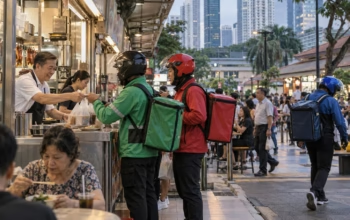
Ducoo is not an isolated case. Across the island, young hawkers are introducing concepts that would have been unimaginable in a hawker centre a decade ago. Berjaya Western, a halal Western stall in Yishun run by 19-year-old Hanz and his friends, used TikTok to rack up 180,000 views within hours of launching—a testament to the power of digital marketing in a traditionally low-tech trade. Meanwhile, M+ Fried Rice Paradise at Woodleigh Village Hawker Centre employs two automated woks imported from Guangzhou, costing between S$5,000 and S$15,000 each, to replicate the elusive “wok hei” taste that is quintessential to fried rice.
The Michelin Effect
The mainstreaming of neo-hawker cuisine has been accelerated by institutional recognition. The 2026 Michelin Bib Gourmand selection, now in its 10th year, includes 97 establishments, with 17 having retained the distinction across all editions—a remarkable feat of consistency. Among the new entrants are Rajarani Thosai, a Tampines hawker stall serving freshly made thosai and appam with nearly 20 fillings, and Boon Keng Road Fish Head Bee Hoon. The guide’s willingness to embrace both heritage hawkers and modern concepts signals a broader cultural shift: Singapore is no longer debating whether hawker food can be innovative—it is celebrating it.
The Price of Progress
Yet the neo-hawker movement is not without its tensions. Rising operational costs have forced many hawkers to raise prices by 50 cents to S$1 per dish, and some have introduced surcharges for cooking oil and gas. For young hawkers who must bid for leases at market rates—sometimes ten times higher than legacy subsidised rents—the pressure to innovate is matched by the pressure to survive. The question is not whether neo-hawker cuisine can thrive, but whether it can remain accessible to the very communities hawker centres were built to serve.