More Than a Calendar of Shows
To understand Singapore theatre in 2026, it is useful to look beyond individual productions. The real story lies in the network that makes live performance possible: major arts centres, independent companies, festivals, artists, educators and audiences.
This ecosystem gives Singapore theatre both stability and creative tension. Large venues can support ambitious technical work and international touring productions. Smaller companies can focus on new writing, social questions and distinctive local voices.
The relationship between these two levels is important. A healthy theatre culture needs visibility, but it also needs spaces where artists can experiment without relying entirely on large-scale spectacle.
Independent Companies Help Define the City’s Voice
One of the most valuable features of Singapore’s stage culture is the presence of companies that have built recognisable artistic identities.
Wild Rice, for example, is closely associated with Singaporean storytelling and theatre that engages with local culture. Readers can explore the company and verify its current programming through the official Wild Rice website.
Such companies matter because local identity does not appear automatically on stage. It is developed through years of writing, directing, performing and building relationships with audiences.
Why Specific Stories Often Travel Further
A common assumption is that globally accessible theatre must avoid highly local references. In practice, the opposite can be true. Stories rooted in a particular society can become widely meaningful when their emotional conflicts are clear.
A play about family expectations, language, class, belonging or generational change may be unmistakably Singaporean while still speaking to audiences from other countries. The local detail gives the work texture; the human conflict gives it reach.
Major Venues and Smaller Stages Serve Different Purposes
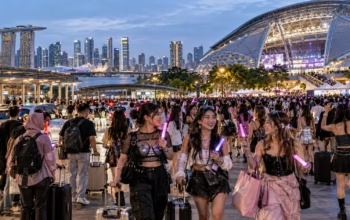
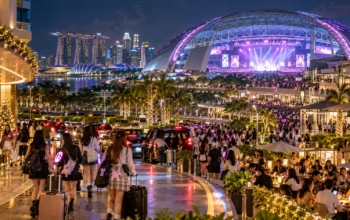
Singapore’s best-known performance venues provide audiences with access to polished productions, large creative teams and advanced technical possibilities. Yet smaller spaces can create an entirely different kind of intensity.
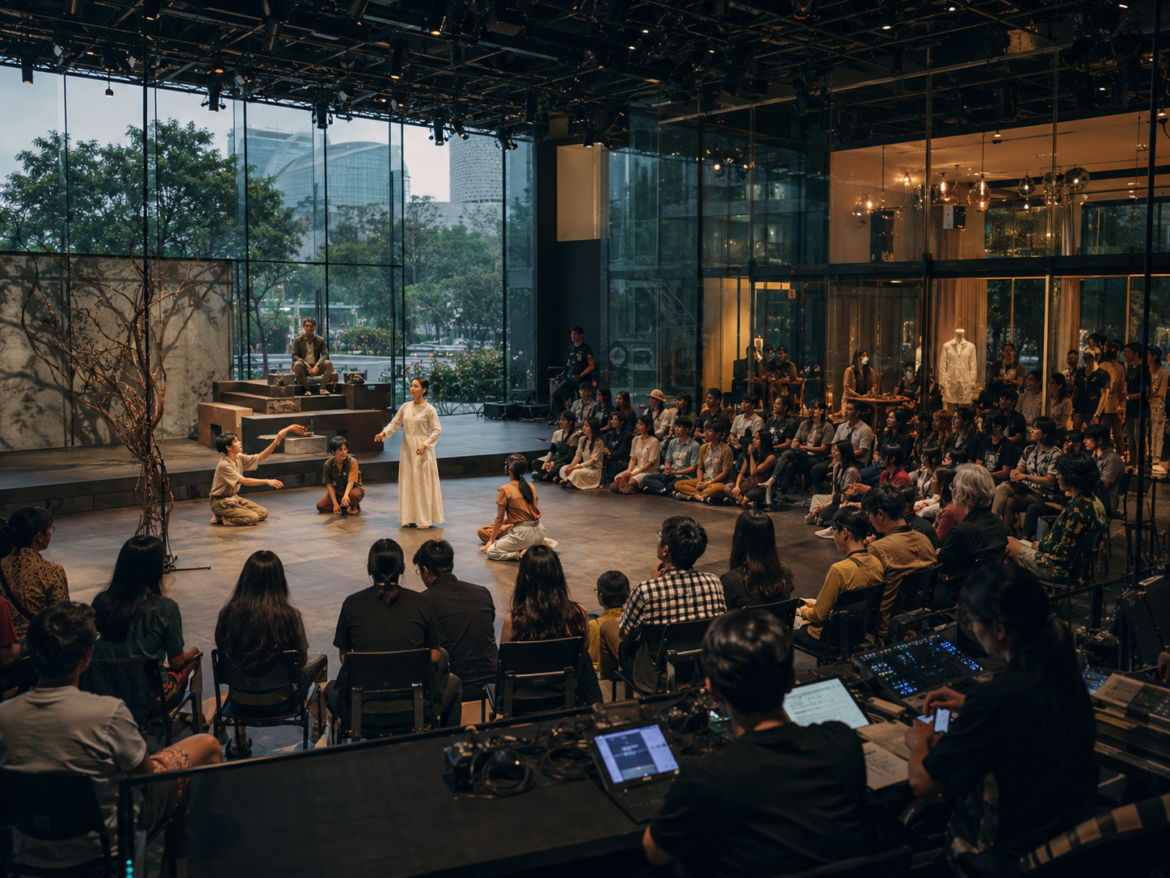
When actors and audiences share a compact room, small gestures become significant. Dialogue can feel more immediate. Difficult subjects may be harder to observe from a comfortable emotional distance.
Neither model is inherently better. Their value lies in the contrast. For a visitor exploring theatre in Singapore, seeing one major production and one smaller local work can provide a much broader understanding of the city’s performance culture.
Theatre Can Reveal What Tourism Often Misses
Many visitors first encounter Singapore through famous landmarks, food districts and shopping areas. Those experiences are valuable, but they do not always explain the conversations taking place within the society.
Theatre can fill part of that gap. A production may explore memories of earlier generations, changing definitions of success, the pressures of urban life or questions surrounding identity.
This is why the most rewarding theatre experiences can continue long after the final scene. The audience leaves not only remembering a performance but also reconsidering the city outside the theatre.
Emerging Trends Reshape the Stage
Contemporary theatre is increasingly influenced by multimedia design, digital culture and collaboration across artistic disciplines. These tools can expand storytelling, but technology is most effective when it serves a clear dramatic purpose.
At the same time, audiences continue to value the essential feature of theatre: physical presence. Performers and spectators occupy the same space, and each performance develops its own rhythm.
That combination of experimentation and immediacy makes Singapore theatre particularly relevant in 2026. Its strength lies not in copying larger theatre capitals but in drawing on the city’s own contradictions: local and international, traditional and technologically advanced, highly structured and creatively restless.