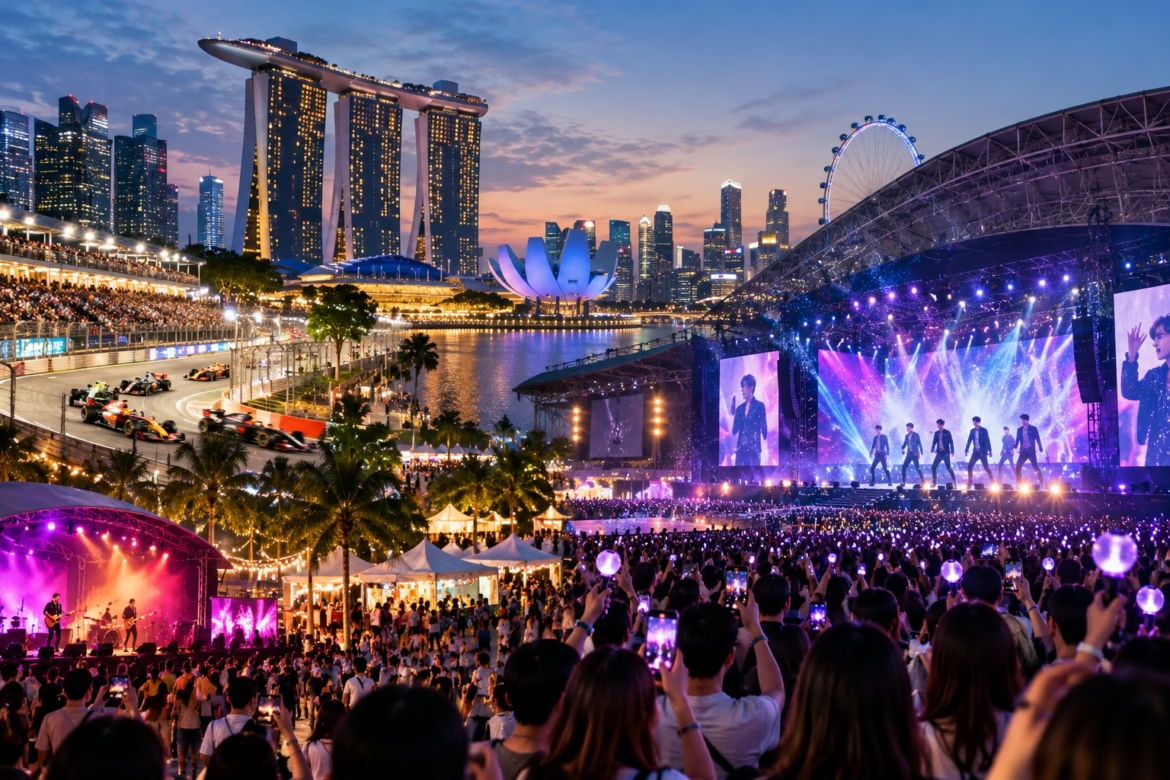
International concerts are increasingly influencing travel decisions across Asia, and Singapore is positioning itself to capitalize on this shift. Instead of promoting live performances as isolated entertainment events, the city is creating opportunities for visitors to combine music, hospitality, shopping, and cultural exploration.
This approach reflects a wider transformation in tourism, where travelers select destinations according to concerts, festivals, and experiences connected to their favorite artists.
Singapore’s 2026 entertainment calendar provides several examples of how this strategy is developing.
Major Concerts Encourage Cross-Border Entertainment Travel
Singapore has established itself as a regional destination for international concert tours, supported by large venues, transportation infrastructure, and connections with major Asian cities.
The upcoming four-night BTS concert series in December 2026 illustrates this appeal. Scheduled at the National Stadium, the performances are expected to attract significant attention from fans throughout the region.
Although official figures identifying international ticket holders have not been released, all four shows are listed as sold out.
Multiple performance dates provide flexibility for visitors coordinating international flights, hotel availability, and personal schedules.
The concentration of concerts within one week also creates opportunities for businesses that cater to entertainment travelers.
Singapore Grand Prix Demonstrates the Power of Music and Sports
The Formula 1 Singapore Grand Prix offers another example of entertainment-led tourism.
Held from October 9 to 11, 2026, the event combined motorsport with concerts featuring Lana Del Rey, The Killers, Janet Jackson, JJ Lin, and other performers.
According to the Singapore Grand Prix organizer’s October 11 announcement, the event recorded 301,294 attendances over its three-day program, its second-highest attendance figure on record. Singapore Grand Prix
This number represents total event attendance rather than a verified count of unique international tourists.
Nevertheless, the event demonstrates how combining international music with a major sporting attraction can create a diversified entertainment product.
Fan Experiences Add Value Beyond Concert Tickets
Concert visitors increasingly seek opportunities to connect with artists outside traditional performances.
Singapore’s BTS THE CITY ARIRANG initiative represents this approach through planned fan activities across museums, entertainment venues, and major attractions.
Rather than concentrating visitors at one venue, the program spreads themed experiences across different parts of the city.
This structure may encourage tourists to explore destinations they would otherwise overlook, while creating additional opportunities for local businesses.
For tourism operators, such experiences also make it possible to develop itineraries that combine concerts with dining, sightseeing, and recreational activities.
Tourism Spending Highlights the Economic Opportunity
Singapore’s tourism industry entered 2026 with strong financial momentum.
Government figures announced in May indicated that tourism receipts reached approximately S$32.8 billion in 2025, alongside 16.9 million international visitor arrivals.
Although these figures encompass the entire tourism sector, they demonstrate the scale of an economy in which entertainment experiences can play a supporting role.
Converting concert attendance into sustained visitor spending requires careful coordination among event organizers, hospitality businesses, transportation providers, and tourism agencies.
Singapore’s Competitive Advantage in Regional Music Tourism
Singapore offers international travelers a combination of modern venues, established hospitality infrastructure, and varied entertainment experiences within a relatively compact destination.
Its challenge is to maintain this appeal while managing travel costs, event accessibility, and competition from other Asian cities.
The growing integration of concerts and tourism experiences suggests that music is becoming an important way for Singapore to differentiate itself in a competitive regional travel market.