A District Where Every Meal Has a Backstory
Singapore Chinatown in 2026 is one of the city’s most rewarding places for travelers who want food with context. The district offers more than famous dishes; it provides a direct view of how Singapore became a food capital through migration, trade, adaptation, and disciplined everyday cooking.
The official Visit Singapore page for Chinatown, https://www.visitsingapore.com/see-do-singapore/places-to-see/chinatown/, frames the neighborhood as a major cultural district. For culinary travelers, that means the food should be read together with the streets: temples, markets, restored shophouses, business lanes, and residential corners all shape how people eat here.
Start With the Hawker Classics
Chinatown Complex Food Centre and Local Rhythm
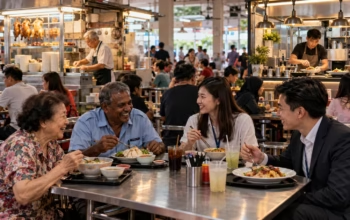
For many visitors, Chinatown Complex Food Centre is the natural starting point. It is crowded, practical, noisy, and deeply Singaporean. Unlike curated food halls designed mainly for tourists, a real hawker centre functions around daily habits. Office workers want speed, elderly residents want familiarity, and visitors want discovery. The best experience comes from observing this rhythm rather than rushing through it.
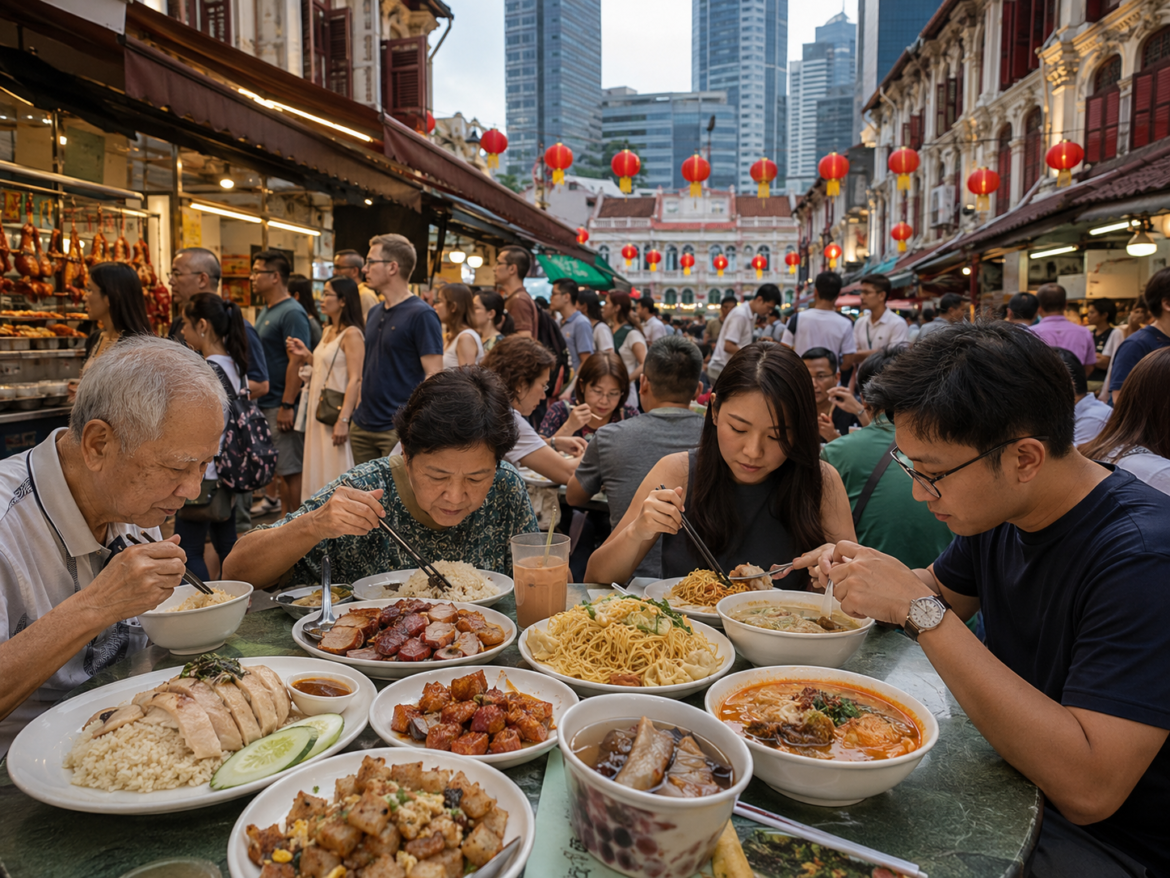
The core dishes include soy sauce chicken rice, roasted duck rice, wanton noodles, fried carrot cake, laksa, fish soup, claypot rice, and char kway teow. Each dish carries a different technical requirement. Chicken rice depends on poaching and sauce balance. Fried noodles depend on wok heat. Soups depend on time. Roasted meats depend on fire control and carving skill.
Iconic Flavors Worth Seeking Out
Soy Sauce Chicken and Roasted Meats
Chinatown’s Cantonese-style roasted and braised meats remain among its strongest attractions. Soy sauce chicken is especially meaningful because it combines simplicity with precision. The skin should look lacquered, the meat should remain moist, and the sauce should taste layered rather than flat. Roasted pork, char siu, and duck add smokier, richer options for diners who want a heavier meal.
Wanton Mee and the Power of Texture
Wanton mee is another must-try dish because it captures Singapore’s love of texture. The noodles should be springy, the dumplings soft, the char siu sweet-savory, and the chili lively enough to cut through the richness. It is a compact plate, but when made well, it shows how hawker food can be both affordable and highly skilled.
Snacks, Bakeries, and Dessert Stops
A strong Chinatown itinerary should include smaller bites. Egg tarts, kaya toast, peanut pancakes, sesame balls, and traditional Chinese desserts help visitors understand the district beyond main courses. These foods often connect to breakfast habits, family errands, and older retail culture.
The Modern Side of Chinatown’s Food Scene
In 2026, Chinatown is also a modern dining destination. Keong Saik Road and nearby streets host restaurants, bars, cafés, and dessert shops that attract younger diners. Some chefs reinterpret Asian ingredients through contemporary plating. Others focus on craft cocktails or specialty coffee. This evolution has created a broader food ecosystem where hawker heritage and lifestyle dining coexist within walking distance.
The real-world issue is balance. As Chinatown becomes more attractive to travelers and lifestyle businesses, rent pressure and changing customer behavior can affect older food operators. The district’s future depends on whether heritage cooking remains commercially viable, not only admired online.
How to Eat Chinatown Like a Local Observer
Begin early, share dishes, and do not judge a stall only by social media fame. Look for steady local queues, clear specialization, and high turnover. A stall that sells only one or two items may be more interesting than a menu trying to please everyone.
For travelers in 2026, the best Chinatown food experience is not about checking off every viral dish. It is about noticing how a neighborhood continues to feed its residents while welcoming the world. That balance is what keeps Singapore Chinatown iconic.