Singapore’s food culture is often described as global, and for good reason. The country relies heavily on imports and enjoys an impressive variety of ingredients year-round. But behind the hawker stalls, home kitchens, and modern restaurants, there is a growing appreciation for something much more grounded: local ingredients in Singaporean cuisine.
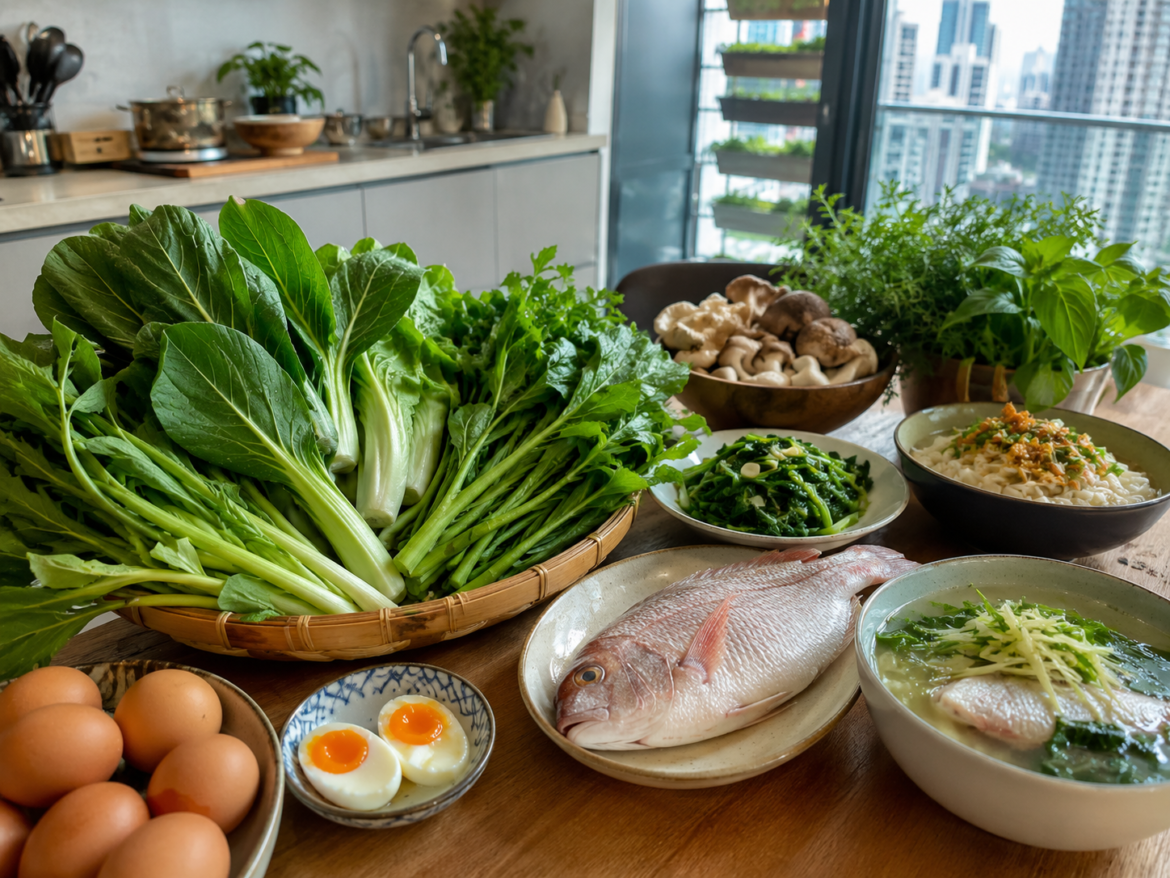
These ingredients—such as locally farmed leafy greens, eggs, fish, mushrooms, and herbs—play a more important role than many people realize. They are not just “alternative options” to imported goods. They are part of a practical response to Singapore’s limited land, high population density, and long-term need for food resilience.
In daily cooking, the difference is noticeable. Local vegetables tend to reach consumers faster after harvest, which often helps preserve freshness and texture. This is especially valuable in Singaporean home cooking, where simple methods like stir-frying, steaming, and quick soups depend heavily on ingredient quality. A plate of stir-fried chye sim or kangkung, for example, relies more on freshness and timing than complex seasoning.
Local eggs are another everyday example. They are widely used in breakfast dishes such as soft-boiled eggs with toast, fried rice, omelettes, and steamed egg custard. When eggs are consistently fresh, the texture and flavor in these simple dishes become more reliable, which matters for households cooking quickly during busy weekdays.
Beyond taste, local ingredients also connect directly to sustainability. Singapore has been actively developing its food production capabilities to reduce vulnerability in global supply chains. The Singapore Food Agency has highlighted the “30 by 30” goal, which aims to strengthen local production capacity. This includes high-tech farming, aquaculture, and controlled environment agriculture. More information can be found on the official SFA site: https://www.sfa.gov.sg
However, sustainability is not only about national policy. It also shows up in small household decisions. Choosing locally grown vegetables a few times a week, or opting for locally produced fish when available, can reduce dependency on long supply chains. It can also help reduce food waste because fresher ingredients tend to last longer when stored properly.
A practical way to think about local ingredients is not replacement but balance. Singaporean cuisine has always been built on regional exchange—rice from Thailand, spices from India, sauces from China, and produce from Malaysia and beyond. Local ingredients simply add another layer to this system, making it more stable and responsive.
For home cooks, the easiest entry point is through familiar dishes. A simple soup, fried noodles, or vegetable stir-fry can all incorporate local produce without changing cooking habits. Restaurants and cafés are also increasingly highlighting local sourcing in specific menu items, especially eggs, greens, and herbs.
The real value of local ingredients is not novelty, but consistency. When ingredients are reliable, cooking becomes easier, and meals feel more predictable in a good way. That is especially important in a fast-paced city like Singapore, where many people cook at home with limited time.
In the long run, using local ingredients is less about following a trend and more about supporting a food system that can adapt. It strengthens everyday cooking while also contributing—quietly but meaningfully—to Singapore’s food future.