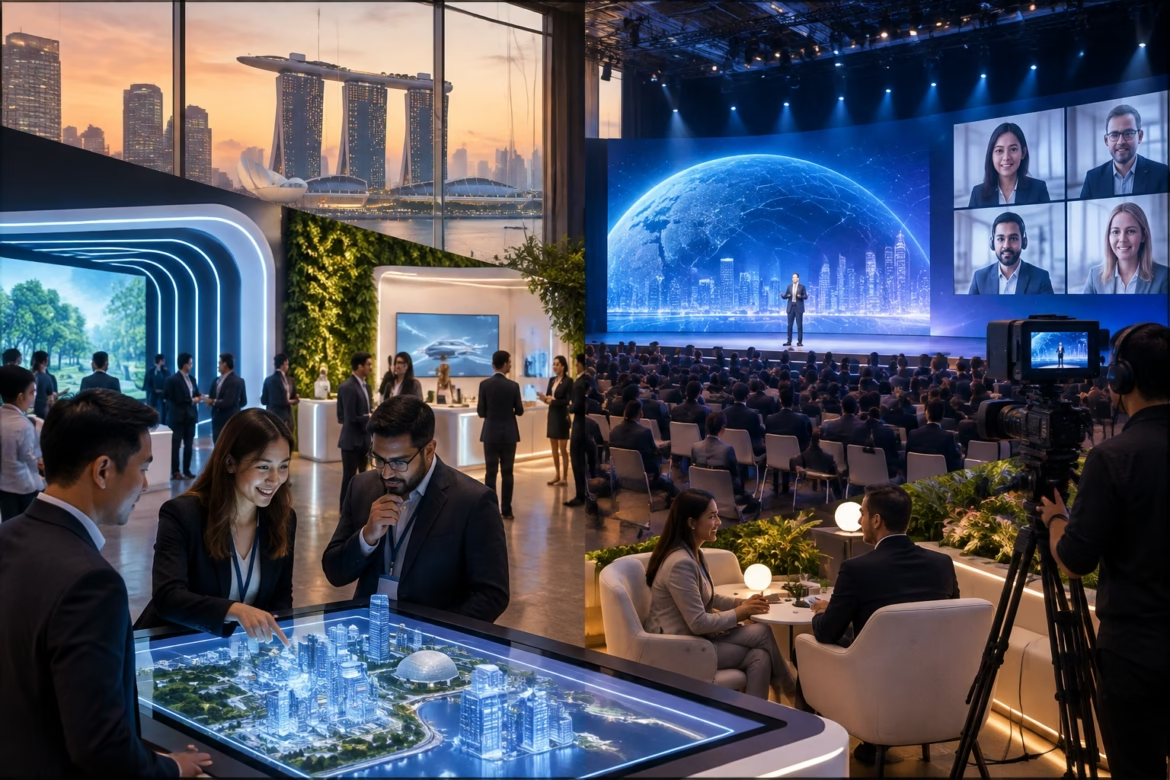
Singapore’s event organizing industry has become a living laboratory for event technology. In 2026, the city’s top agencies are no longer asking whether to use AI—they are racing to deploy it across every touchpoint, from pre-event marketing to post-event follow-up. The result is a new breed of hybrid events that blur the line between physical and virtual attendance, delivering personalized experiences at a scale previously impossible.
AI-Powered Matchmaking and Networking
One of the most transformative tools is AI-driven delegate matchmaking. Platforms like GEVME and Jublia, both headquartered in Singapore, use machine learning algorithms to analyze attendee profiles, interests, and past behavior to suggest the most relevant networking connections. At the 2026 Singapore International Energy Week, organizers reported a 45% increase in scheduled one-on-one meetings compared to 2024, thanks to AI recommendations. The system even sends real-time nudges: “Your top match is 20 meters away in Hall B—introduce yourself before the next keynote.”
Virtual Venues and Digital Twins
Hybrid events in Singapore now often feature “digital twins”—3D replicas of physical venues that virtual attendees can navigate using avatars. Event organizer Gevme partnered with Marina Bay Sands to create a photorealistic virtual version of the convention center, complete with interactive sponsor booths, live chat with exhibitors, and even virtual coffee lounges. A 2026 report by the Infocomm Media Development Authority (IMDA) revealed that 62% of Singapore-based event organizers plan to invest in digital twin technology by 2027, citing higher virtual attendee engagement and sponsorship revenue.
Real-Time Analytics and Sentiment Tracking
Gone are the days of post-event surveys as the only feedback mechanism. Singapore organizers now deploy sentiment analysis tools that scan social media, app comments, and live chat feeds during the event to gauge audience mood in real time. If dissatisfaction spikes in a particular session, organizers can adjust lighting, volume, or even speaker content on the fly. Facial expression analysis—with consent and privacy safeguards—is being tested at smaller VIP events to measure keynote impact. According to a 2026 survey by the Singapore Computer Society, 41% of local event agencies now employ a dedicated “event data scientist,” a role that barely existed five years ago.
AI for Operational Efficiency
Behind the scenes, AI streamlines logistics: predictive attendance models reduce food waste by up to 30%, dynamic scheduling algorithms optimize room allocation, and chatbots handle 80% of delegate queries without human intervention. Event organizer Constellar integrated an AI-powered crowd management system at the 2026 Food & Hotel Asia, using camera feeds and heatmaps to predict congestion and redirect attendees to underutilized zones, cutting average wait times at popular booths from 12 minutes to 4 minutes.
The Human Element Remains Critical
Despite the tech obsession, Singapore’s top event organizers emphasize that AI is a tool, not a replacement for creative storytelling. The most successful tech-driven events pair algorithm-driven efficiency with emotionally resonant human experiences—a surprise acoustic performance in a virtual lounge, a live Q&A with a CEO that feels unscripted. As hybrid technology matures, the differentiator is no longer the platform itself but how organizers use data to craft moments that feel personal at scale.