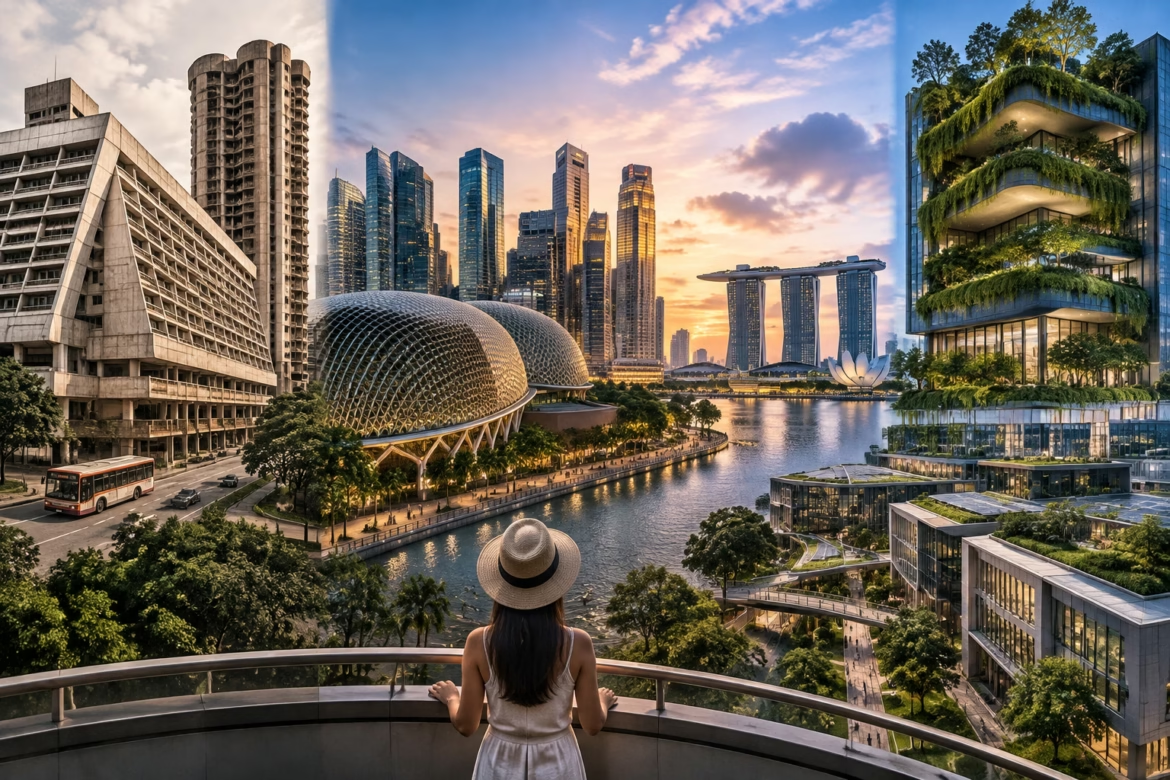
When most tourists think of architectural wonders, they envision luxury hotels or towering corporate headquarters. However, the true innovation in Singapore often lies not in its commercial districts, but in its heartlands. The city-state’s public housing program, managed by the Housing & Development Board (HDB), is a masterclass in social architecture that draws urban planners from around the globe.
Rethinking the “Slum” Stereotype
In most parts of the world, public housing is associated with monotony and poor maintenance. Singapore has turned this concept on its head. The modern HDB estates are vibrant, colorful, and structurally complex. They are designed not just to house people, but to foster community interaction and mental well-being.
The most famous example is The Pinnacle@Duxton. Located in the historical Tanjong Pagar district, this complex features seven towers connected by the world’s longest sky gardens. These are not just private balconies; they are public parks located on the 26th and 50th floors. This design solves a critical urban problem: lack of ground space for recreation. By lifting the park into the sky, residents gain access to running tracks and outdoor gyms with panoramic views.
The SkyTerrace and Community Bonds
A more recent addition to the architectural tourism circuit is SkyTerrace@Dawson . This project specifically targets multi-generational living. The design includes “flexi-layouts” that allow families to adapt their apartments as their needs change over decades. The architectural highlight is the “SkyVille” section, which is structured around open-air sky gardens that weave through the blocks.
These gardens are designed to be “passive spaces” where residents naturally bump into each other, creating organic social bonds. For a tourist, visiting these estates offers a glimpse into the daily rhythms of Singaporean life, far removed from the curated experience of Orchard Road.
The Aesthetic of Color
Modern HDB design has also embraced bold aesthetics. The Tampines GreenVines project, for example, utilizes a pixelated color palette and varied rooflines to break down the imposing mass of the building. This approach to “visual fragmentation” makes the buildings look smaller and more intimate, reducing the psychological anxiety often associated with high-rise living.
Why This Matters for Tourism
In 2026, there is a growing trend of “Social Architecture Tourism.” Travelers are increasingly curious about how societies solve problems like housing shortages and loneliness. The Urban Redevelopment Authority (URA) has noted an increase in visitors heading out to neighborhoods like Tiong Bahru and Dawson to study this phenomenon. These areas blend the old SIT flats with the new HDB designs, showing a continuum of social housing philosophy.
For accurate data on how these housing projects contribute to the nation’s high satisfaction rates, the Singapore Department of Statistics (singstat.gov.sg) provides periodic reports on household well-being. This data confirms that architectural design plays a crucial role in the social fabric of the nation.
Exploring these estates reveals that architecture is not merely about creating a pretty skyline. It is about engineering happiness and social cohesion on a national scale. It is a lesson in humility and pragmatism that every architecture lover should witness.