The most familiar images of Singapore are architectural: Marina Bay, high-rise buildings, futuristic gardens, and carefully designed public spaces. Yet behind this visual identity is a cultural network that offers a more complicated story of the city.
For travelers in 2026, art can become a route into Singapore’s past and present. Museums examine colonial experience and nation-building, contemporary artists respond to environmental and technological change, and performance venues express the traditions of a multicultural society.
Read Singapore’s History Through Art
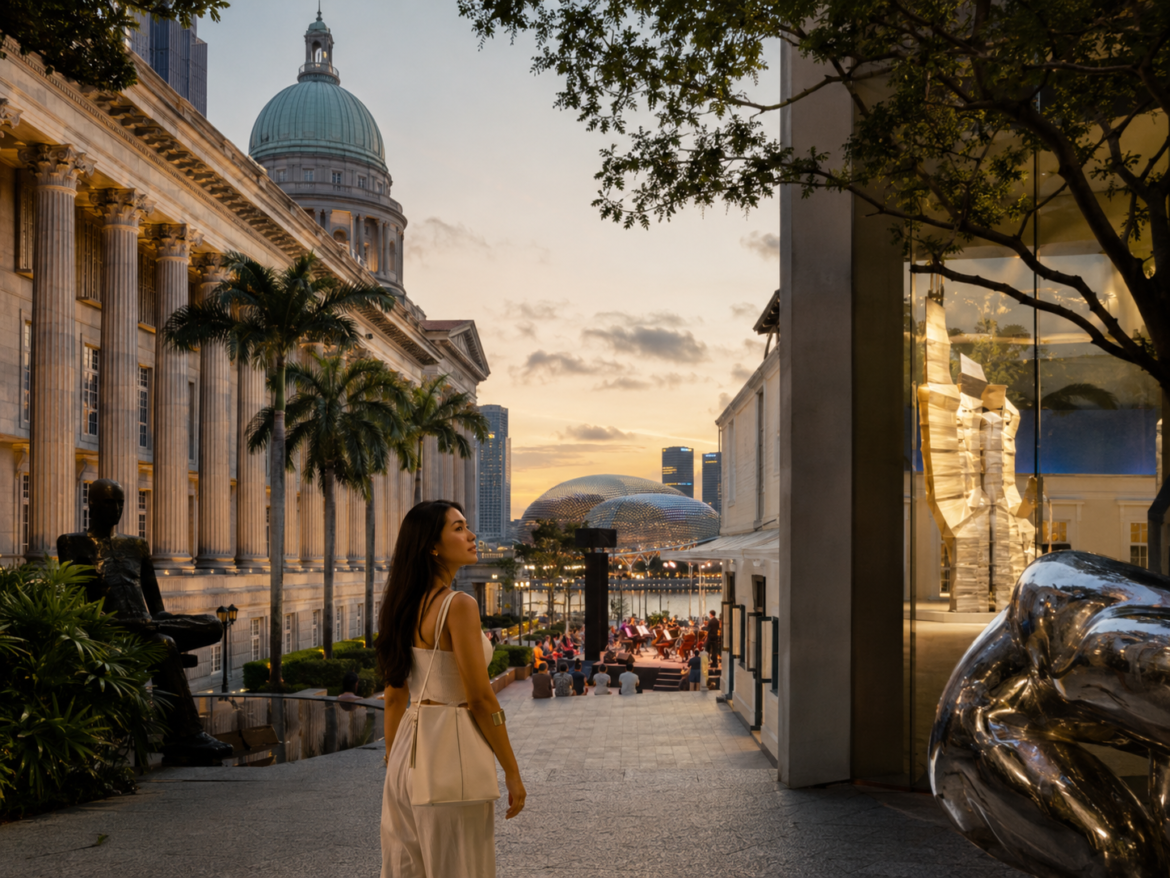
National Gallery Singapore is a natural first stop for travelers seeking cultural context. Located inside the historic City Hall and former Supreme Court buildings, it brings together architecture, political memory, and visual art.
The institution is especially important for its emphasis on modern art from Singapore and Southeast Asia. For overseas visitors, this regional perspective can challenge the assumption that modern art history was shaped only in Europe and North America.
Artists across Southeast Asia developed distinctive responses to colonial rule, independence, social change, rural traditions, and urban modernization. Seeing these works together helps visitors understand Singapore not as an isolated city-state but as part of a much larger regional story.
Current exhibitions and practical travel details can be checked on the official National Gallery Singapore website.
Discover Art That Responds to the Present
Contemporary Practice at Singapore Art Museum
The next layer of the journey is contemporary art. Singapore Art Museum introduces practices that can be more experimental and less predictable than traditional museum displays.
Visitors may encounter video, installation, sound, digital work, or projects that explore political memory, urban life, ecological concerns, and changing social relationships.
The museum’s connection with Tanjong Pagar Distripark is significant. Art presented in a former industrial environment creates an alternative to the monumental atmosphere of a national institution.
This contrast makes Singapore’s art scene especially useful for cultural travelers: different spaces produce different ways of looking.
Understand the Role of Galleries
A museum preserves and interprets art, while a gallery also participates in the active circulation of artists and ideas. That distinction makes gallery visits valuable.
Gillman Barracks has offered one of Singapore’s clearest examples of a dedicated arts cluster. Its former military buildings provide a distinctive backdrop for exhibitions and creative activity.
Travelers may find contemporary Southeast Asian art, international names, or smaller exhibitions with highly specific curatorial themes. Because commercial gallery programs often change more rapidly than museum displays, repeat visitors can have very different experiences.
Checking current opening schedules remains essential, particularly for travelers with limited time.
Experience Culture Through Performance
Art in Singapore should not be reduced to objects displayed on walls. Live culture is equally important.
Esplanade – Theatres on the Bay is central to the city’s performing arts scene. Its venues can present theater, dance, music, interdisciplinary work, and culturally rooted programs.
A carefully chosen performance can transform the visitor’s understanding of Singapore. Dance can communicate tradition through movement. Theater can address social issues directly. Music can reveal the connections between communities that museums sometimes explain only through text.
A More Meaningful Way to See Singapore in 2026
The key to cultural travel in Singapore is comparison. Visit a historic building and then an industrial arts space. See a major public collection and then enter a smaller gallery. Spend time with visual art before experiencing a live performance.
This approach reveals one of Singapore’s most interesting realities in 2026: the city’s cultural identity is constantly negotiated between preservation and reinvention.
The result is an art journey that goes far beyond sightseeing. It offers a deeper view of how Singapore understands its history, represents its diversity, and imagines its future.