A Greener Way to See Singapore
A trip to Singapore in 2026 does not have to revolve only around shopping streets, rooftop views, and fine dining. The city is also one of Asia’s most accessible destinations for travelers who want a sustainable itinerary. With efficient public transport, protected nature areas, and innovative urban gardens, visitors can explore the country while keeping environmental impact in mind.
The government-backed Singapore Green Plan 2030 provides useful context for this transformation. It reflects national priorities such as greener transport, sustainable living, and nature-based urban planning—ideas that are increasingly visible in the tourism experience.
Day One: Start With Gardens by the Bay and Marina Bay
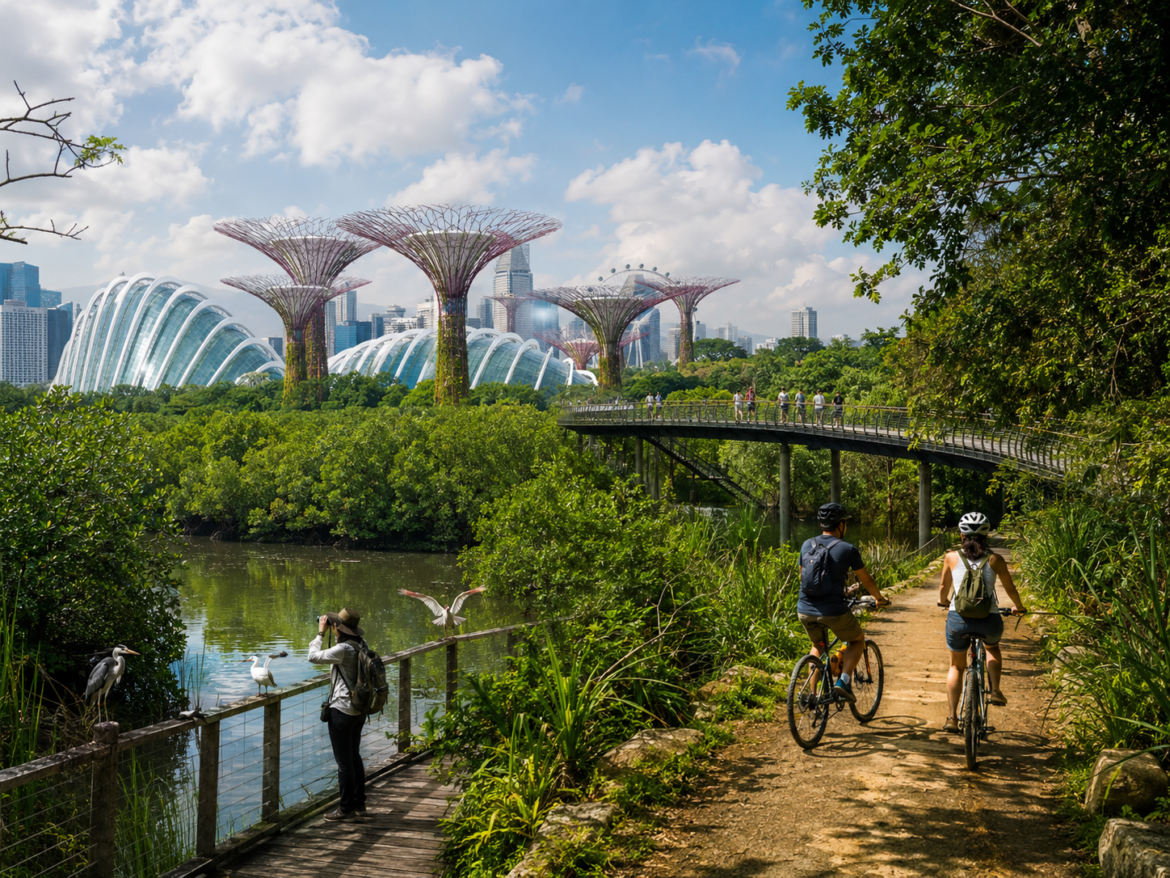
Gardens by the Bay is a practical starting point because it is central, easy to access, and rich in environmental storytelling. The Cloud Forest and Flower Dome introduce visitors to climate zones, plant diversity, and conservation themes, while the outdoor gardens show how public green space can be integrated into a dense city.
Travel Tip for Lower Impact
Use the MRT instead of taxis where possible. Singapore’s public transport system makes it easy to reach major attractions while reducing unnecessary car journeys. Travelers can also refill water bottles at many public areas and avoid buying repeated plastic drinks.
Day Two: Explore the Rail Corridor and Southern Ridges
The Rail Corridor is ideal for visitors who want a more local, ground-level experience. It connects heritage, greenery, and neighborhood life through a long walking and cycling route. Unlike attractions built around fast consumption, the corridor encourages slow observation.
Southern Ridges offers another memorable green route, with forested trails, elevated walkways, and skyline views. For travelers, it proves that eco-friendly tourism does not have to mean leaving the city. In Singapore, urban nature can be part of the main itinerary.
Day Three: Visit Sungei Buloh Wetland Reserve
Sungei Buloh Wetland Reserve is one of the most rewarding places for visitors interested in biodiversity. Its mangrove environment is home to birds, fish, insects, and reptiles. During migratory seasons, birdwatchers may find the reserve especially engaging.
Why This Stop Matters
Wetlands are often overlooked by mainstream tourists, yet they play an important role in coastal protection and wildlife habitat. Visiting Sungei Buloh helps travelers understand that sustainable tourism is not only about beautiful scenery; it is also about ecological function.
Day Four: Take a Slow Trip to Pulau Ubin
Pulau Ubin gives travelers a rare view of Singapore’s rustic past and natural present. Cycling around the island, walking near Chek Jawa Wetlands, and observing village life offer a slower rhythm than the city center.
The most responsible way to enjoy Pulau Ubin is to keep the visit light: bring back your trash, stay on trails, avoid disturbing wildlife, and support small local operators. This keeps the island from becoming another over-commercialized attraction.
The 2026 Travel Mindset
The strongest sustainable itinerary in Singapore is not about doing less. It is about choosing better: fewer rushed stops, more public transport, deeper nature experiences, and greater awareness of how tourism affects local spaces.