The smell hits before the taste. A block of belacan — fermented krill, pressed and dried into a dense cake — is being toasted over a low flame in a Singapore test kitchen, and the room fills with a pungent, saline, almost oceanic funk. Twenty minutes later, that same block has been pounded into a sambal that tastes of roasted shellfish and deep, rounded savouriness. “The aroma mellows into pure savouriness once cooked,” says the instructor, and it is the oldest lesson in local fermentation. What is new is who is listening.
A pantry older than the modern menu
Belacan, tempeh and tau cheo have been part of Singapore’s cooking for generations — Malay, Peranakan, Chinese and Eurasian kitchens have all built flavour on them. Belacan is made from tiny geragau krill, salted and fermented, and it is the backbone of sambal belacan and countless Peranakan dishes; it was once so closely associated with the region that it was nicknamed “Malacca cheese”. Tempeh, a fermented soybean cake bound by Rhizopus mould, is sold fresh in wet markets and supermarkets and appears in everything from mee goreng to sambal goreng. Tau cheo, a fermented soybean paste, brings a malty, rounded saltiness to braises and stir-fries, sitting in the same family as Japanese miso but with a distinctly local profile.
These are not boutique products. They are everyday ingredients. The shift is in how professional kitchens and food businesses are treating them: not as heritage props, but as live fermentation cultures with measurable microbial and flavour potential.
The science catches up with the pantry
In late 2025, researchers at A*STAR’s Singapore Institute of Food and Biotechnology Innovation (SIFBI) published a study isolating lactic acid bacteria from tempeh and oncom, screening the isolates for probiotic characteristics and potential food applications. The work matters because it reframes tempeh not simply as a protein source but as a carrier of live cultures — a Southeast Asian fermented food with a microbiome story of its own. The same research group has been explicit about the goal: unlocking prebiotics, probiotics and postbiotics from indigenous fermented foods and studying how they interact with the gut.
This is a significant shift in framing. For years, the global conversation about fermented foods and gut health was dominated by kimchi, kefir and kombucha. The SIFBI work puts tempeh and oncom — foods that have been on Singaporean tables for decades — into that same scientific conversation.
From wet market to modern kitchen
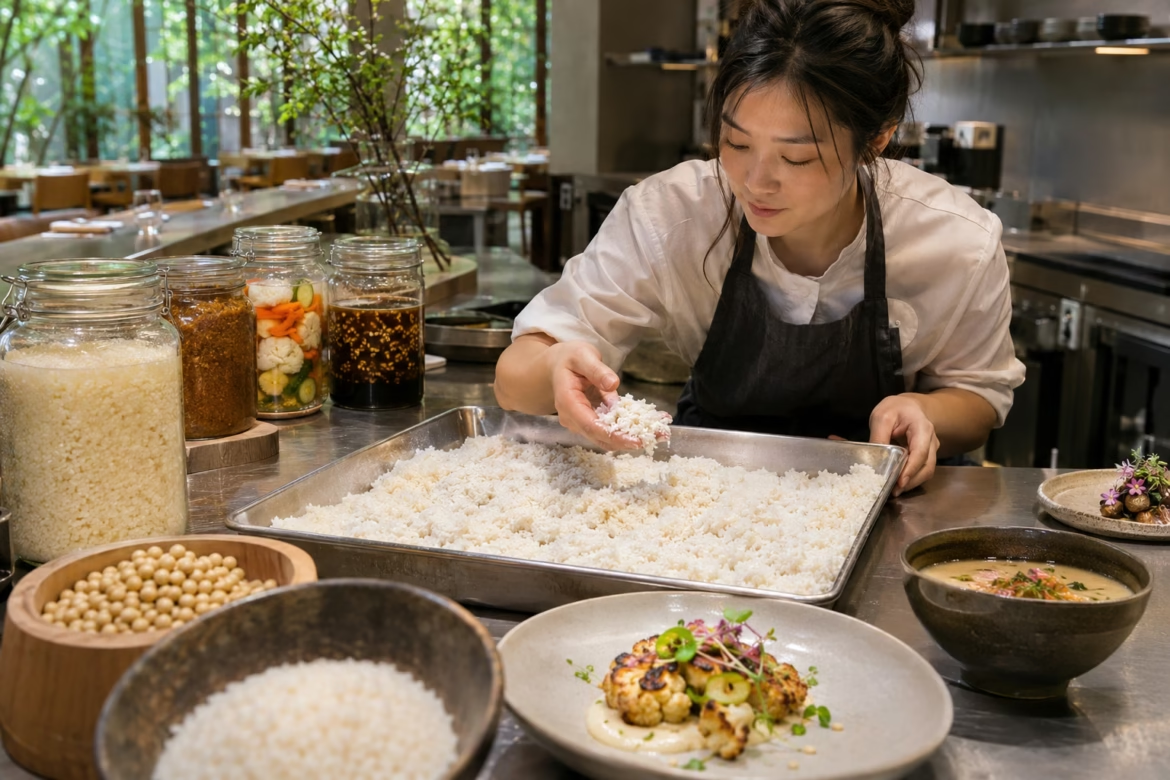
The practical result is a kind of double movement. On one side, chefs are treating belacan and tau cheo with the same precision they once reserved for imported condiments: toasting belacan before pounding, frying tau cheo briefly in oil to release its aroma, tasting and adjusting salt because these pastes are intensely savoury. On the other, food manufacturers and educators are building new formats around the same ingredients — fermentation workshops now teach kimchi and kombucha alongside the science of anaerobic culturing, and the SkillsFuture course catalogue lists food-fermentation modules covering safety, quality evaluation and troubleshooting.
The modernisation is not about replacing belacan with something blander. It is about understanding what belacan already does — the enzymatic breakdown, the glutamate load, the preservation logic — and giving it a place in kitchens that think in terms of cultures, cycles and flavour compounds. The paste has not changed. The lens has.