Why Animation Requires International Partnerships
High-quality animation is expensive, technically demanding, and time-consuming. A single studio may need writers, storyboard artists, designers, animators, lighting specialists, sound teams, distributors, broadcasters, and licensing experts before a project becomes commercially viable.
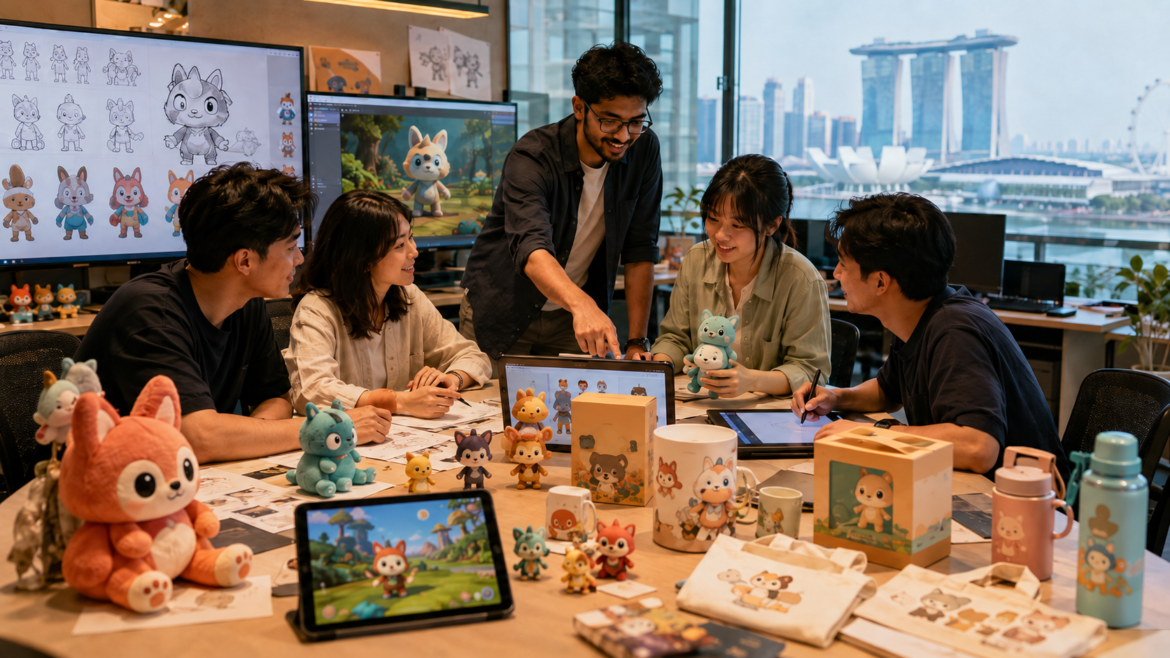
For Singaporean companies, co-production offers a practical way to divide these responsibilities. One partner may provide creative development, while another contributes financing, animation services, distribution access, or relationships with broadcasters.
This model is particularly relevant to Singapore because its domestic market is relatively small. International revenue is often necessary for a major animated project to recover its development and production costs.
Singapore Can Function as a Coordination Center
Singapore’s strengths include legal stability, intellectual property protection, international business experience, English-language communication, and connectivity with Asian and Western markets.
These advantages allow a Singaporean producer to operate as the central coordinator of a multinational project. Creative development may take place in Singapore, animation production may involve teams elsewhere in Southeast Asia, and distribution may be handled by companies in Europe, North America, or East Asia.
This arrangement can provide cost efficiency without requiring the Singapore studio to surrender ownership of its concept. However, ownership must be clearly established before production begins.
Intellectual Property Terms Require Careful Negotiation
Co-production agreements should define who owns the characters, scripts, designs, music, trademarks, finished episodes, and future adaptation rights.
Revenue arrangements must also cover broadcasting, streaming, advertising, games, publishing, merchandise, live events, and possible sequels. A deal that appears attractive during production may become restrictive if one party controls the most valuable international rights.
Singaporean studios should therefore treat legal and commercial planning as part of the creative process. A strong concept has limited long-term value when its creator owns little of the resulting intellectual property.
Internationalization Support Can Reduce Market Risk
Enterprise Singapore provides programs intended to help local companies expand into overseas markets. One relevant initiative is the Market Readiness Assistance Grant, which supports eligible internationalization activities under its prevailing conditions.
For an animation company, overseas expansion may involve attending content markets, studying audience demand, obtaining professional advice, developing regional partnerships, or establishing a presence in a target country.
Studios must confirm current eligibility rules directly with the agency, since funding conditions and support levels may change.
Content Markets Remain Important
Digital communication has made international collaboration easier, but major content markets still play an important role. Events such as MIPCOM, Kidscreen Summit, Asia TV Forum & Market, and Annecy’s Mifa market bring together producers, distributors, commissioners, investors, and buyers.
A studio attending these events needs more than attractive artwork. Buyers generally expect a clear audience profile, episode format, budget, production timeline, creative team, distribution strategy, and evidence that the concept can sustain multiple episodes or seasons.
A professional pitch should also explain why the project is different from competing titles and why its production team is capable of delivering it.
Co-Production Should Add More Than Money
The best partner is not always the company offering the largest investment. A valuable partner may provide trusted distribution relationships, knowledge of a specific audience, experienced writers, licensing expertise, or access to an established production pipeline.
Singaporean studios should look for partners whose capabilities address genuine weaknesses in the project.
Co-production can give Singapore animation companies access to resources beyond the limits of their domestic market. When contracts protect creative control and intellectual property, international collaboration can turn a regional concept into a scalable global franchise.