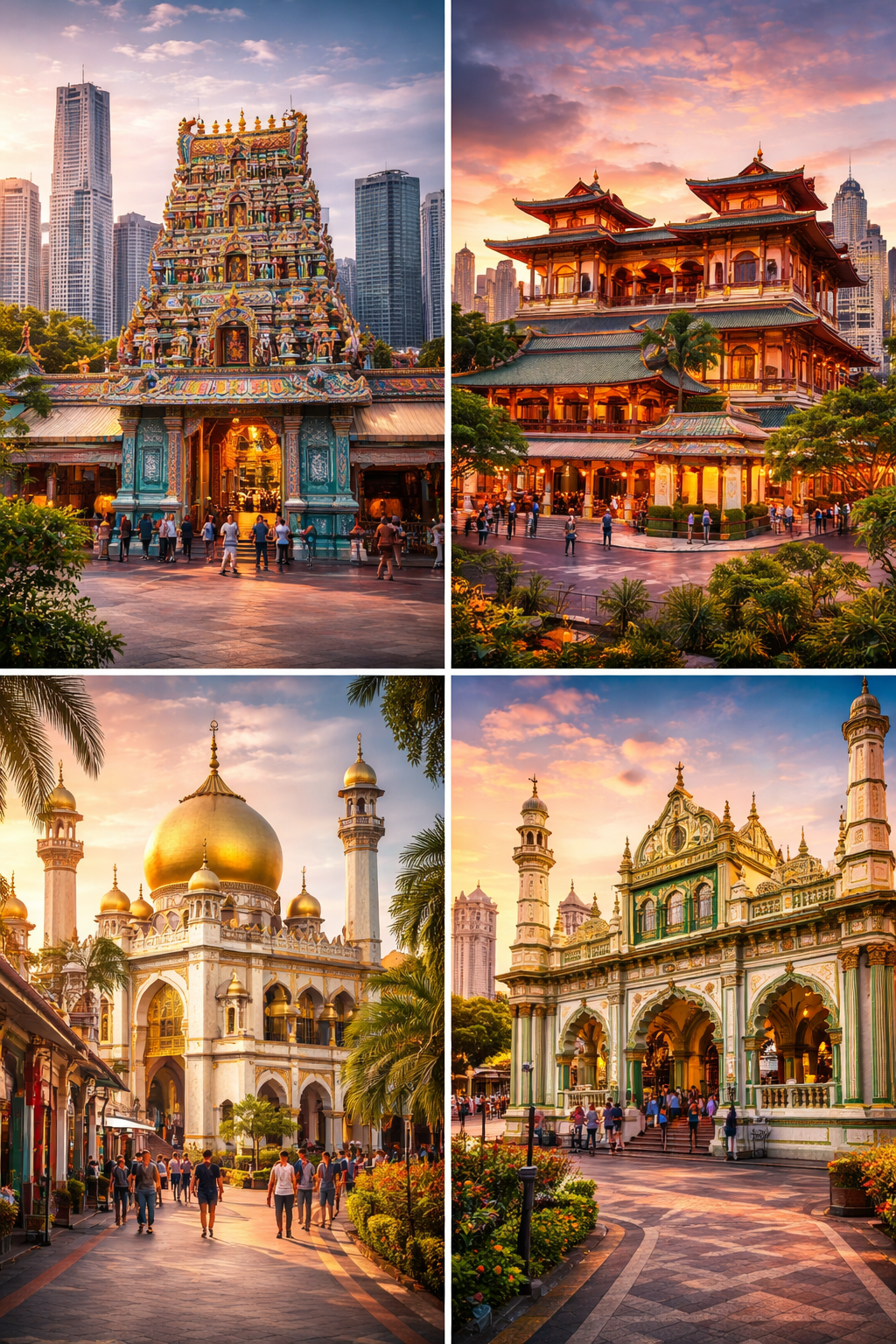
Singapore, with its reputation as a global city of innovation and progress, also has a deep connection to its spiritual roots. The city’s temples and mosques stand as monuments to the diverse faiths practiced by its people. Whether you are exploring Hinduism, Buddhism, or Islam, these sacred places offer fascinating insights into the religious practices of Singapore’s multicultural population.
Start your religious exploration with a visit to the Sri Mariamman Temple, the oldest Hindu temple in Singapore. Located in Chinatown, this temple is dedicated to the goddess Mariamman, known for her healing powers. The temple’s architectural style, which follows the Dravidian tradition, is characterized by elaborate sculptures and colorful deities. The annual Hindu festival of Deepavali (Festival of Lights) is celebrated here with much fanfare, attracting both locals and tourists alike.
Another significant temple is the Buddha Tooth Relic Temple, located in the Chinatown area. This impressive temple is not only a place of worship but also a museum dedicated to the preservation of Buddhist heritage. It houses relics and sacred objects, including a tooth relic believed to belong to the Buddha. The temple’s grand architecture, with its rich red and gold color scheme, is an example of Chinese Buddhist temple design, and its peaceful atmosphere is perfect for reflection.
For visitors interested in Islamic culture, the Sultan Mosque is one of the most remarkable places to visit in Singapore. Situated in the Kampong Glam district, the mosque was constructed in 1824 and is a key religious center for the local Malay-Muslim community. Its large golden dome and towering minaret make it one of the most prominent landmarks in the area. The mosque also has a beautiful prayer hall that is open to both worshippers and visitors, offering a quiet place to observe the practices of Islam.
Another architectural gem in the Little India district is the Masjid Abdul Gafoor. This mosque stands out due to its combination of Indian, Malay, and Arabic architectural styles. Built in the 19th century, it is a testament to the diversity of the Muslim community in Singapore. The mosque’s intricate mosaics and colorful tiles are a visual delight, while its serene courtyard provides a peaceful setting for prayer and contemplation.
In Singapore, the fusion of different religious traditions can be seen in the beauty and architecture of these sacred spaces. Exploring these temples and mosques provides visitors with an enriching experience that highlights the city’s multicultural fabric and its commitment to religious harmony.