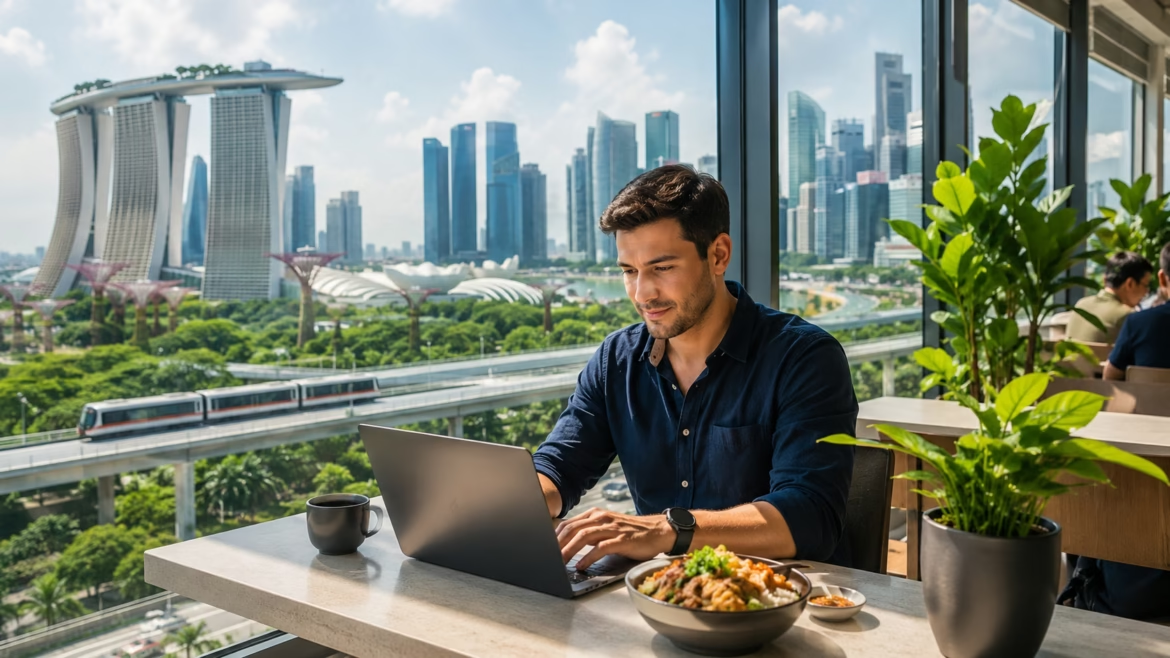
Singapore has a reputation for being expensive, and that reputation is only partly true. A digital nomad can spend S$5,000 a month and still eat at hawker centres, or blow S$15,000 on luxury serviced apartments and fine dining. The key is knowing where to compromise and where to invest.
Accommodation: Where Remote Workers Actually Stay
Co-Living and Serviced Apartments
Short-term rentals under three months are limited due to Singapore’s housing rules, so most digital nomads choose co-living operators like lyf, Cove, and Hmlet. Expect to pay S$1,800–S$3,500 per month for a private room with utilities, Wi-Fi, and access to communal work areas. For a shorter workation, serviced apartments from brands like Ascott or lyf offer daily rates from S$150–S$300, often with weekly cleaning.
Neighbourhood Price Differences
Bugis, one-north, and Tanjong Pagar carry premium rents because of proximity to co-working spaces and MRT stations. More affordable options exist in Geylang, Balestier, and Paya Lebar, where older buildings have been converted into budget co-living units. The VisitSingapore travel essentials page can help you understand entry rules and transport passes before you commit.
Food and Daily Expenses: The Hawker Centre Advantage
A meal at a hawker centre costs S$4–S$8, while a mid-range cafe lunch runs S$20–S$35. If you eat two hawker meals and one cafe meal per day, your monthly food budget will be around S$600–S$1,000. Coffee from local kopitiams costs S$1.50–S$2.50, compared with S$6–S$8 at specialty cafes. This gap gives remote workers a simple way to control daily spending without sacrificing quality.
Transport and Connectivity Costs
Singapore’s MRT and bus system is reliable and affordable. A single trip costs S$1.50–S$2.50 depending on distance. The Singapore Tourist Pass offers unlimited rides from S$17 per day, but monthly commuters typically spend S$120–S$150 on an EZ-Link card. Avoid taxis during peak hours unless you are splitting fares.
A Real Current Case: The Monthly Co-Living Discount Trend
In 2025 and 2026, co-living operators have responded to the rise of remote work by offering monthly stay discounts of 10–20 percent for bookings over 28 nights. Some, like lyf one-north, bundle co-working desk access and community events into the monthly rate. This makes the first month in Singapore cheaper than a comparable hotel stay and gives nomads built-in networking opportunities.
A Realistic Monthly Budget for a Solo Digital Nomad
A moderate budget: co-living room S$2,200, food S$800, transport S$130, co-working hot desk S$400, mobile data S$20, entertainment S$300. Total around S$3,850, or about US$2,850. It is not Southeast Asia’s cheapest, but it buys reliability, safety, and time saved on logistics. For remote workers who value a frictionless environment, Singapore’s premium is often worth it.