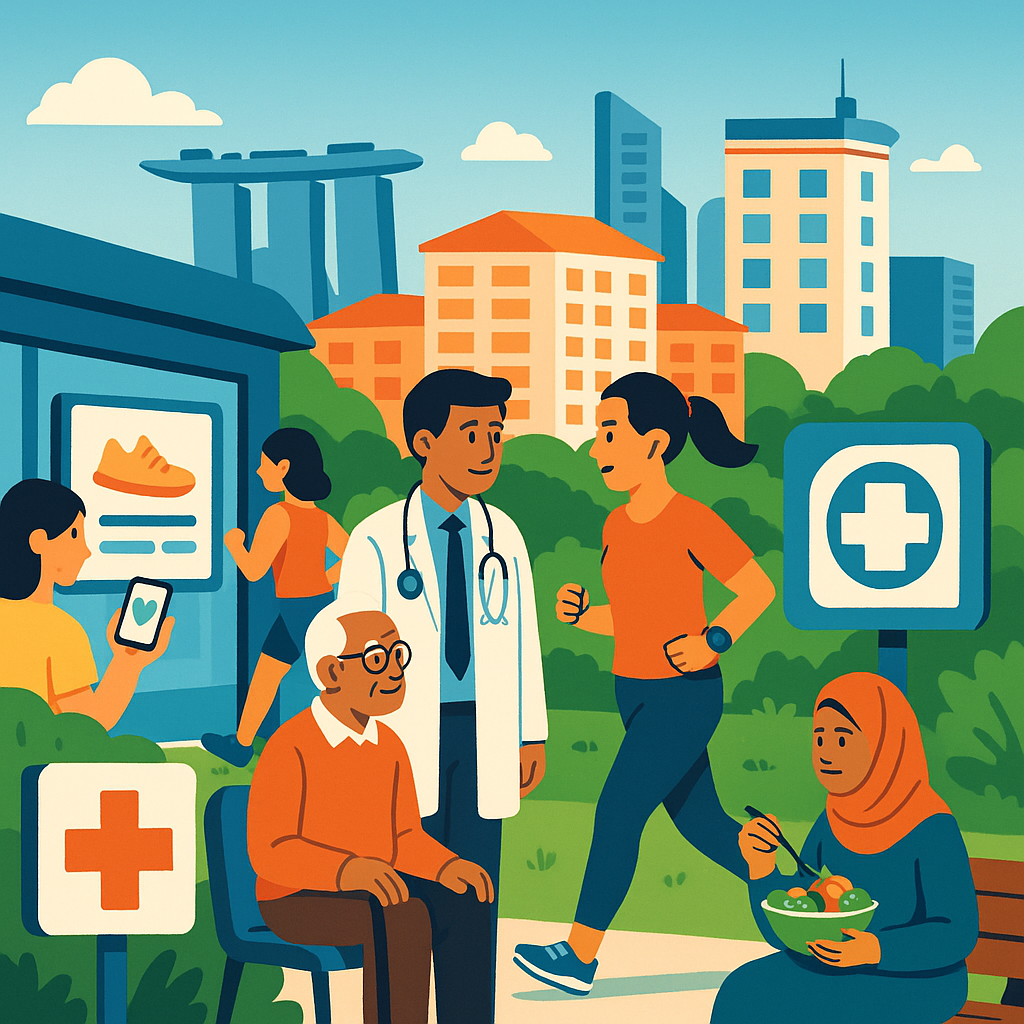
Singapore’s public health achievements are closely tied to the choices made by its government. By combining regulation, financing, and active promotion of healthy lifestyles, the state has built a framework that aims to keep its population healthy while maintaining sustainable costs.
One dimension of this framework is policy leadership. The Ministry of Health oversees national strategy, supported by research units and specialised agencies. It identifies key priorities—for example, tackling chronic diseases, preparing for ageing, and ensuring mental health services are available. Policy tools range from legislation that governs healthcare professionals, facilities, and pharmaceuticals, to guidelines that define quality standards and patient safety requirements.
Another dimension is how the government pays for health. Rather than offering entirely free services or leaving everything to private insurance, Singapore uses a blended model. People contribute to mandatory savings accounts and insurance plans, but the state subsidises many services, especially in public institutions. For those who struggle financially, additional assistance is available. This layered safety net is designed so that most citizens can afford basic care while still feeling the impact of their healthcare decisions.
Service delivery reflects the same deliberate planning. Public hospitals form part of large, semi-autonomous clusters that report to the government and are given population-health targets. Polyclinics provide primary care, vaccinations, and health screenings at subsidised rates. Over time, efforts have been made to strengthen links between hospitals and community care providers so that patients with long-term conditions can be managed closer to home.
Prevention is treated as a core responsibility, not an afterthought. The Health Promotion Board and other agencies create programmes that encourage people to move more, eat better, avoid tobacco, and take care of their mental well-being. Interventions might include public campaigns, changes to food labelling, workplace wellness schemes, and activities in schools and community centres. By acting on many fronts at once, the government seeks to shift social norms around health.
The state’s role is also evident in infectious disease management. Laws require healthcare providers to report specific diseases, and national programmes monitor data to spot unusual patterns. When necessary, authorities can enforce isolation, quarantine, or movement restrictions. Investments in laboratories, dedicated treatment centres, and emergency response teams help ensure that outbreaks can be tackled quickly. Public communication is treated as a strategic tool to sustain trust and encourage responsible behaviour.
Looking forward, Singapore’s government is working to adapt its public health framework to new realities. The population is ageing rapidly, and chronic illnesses consume a growing share of resources. There is greater recognition of mental health and the need for accessible support services. At the same time, digital health technologies offer opportunities for remote monitoring, virtual consultations, and better use of data. Government policies increasingly emphasise community-based care, partnerships with social services, and personal responsibility for lifestyle choices.
Taken together, these elements—policy leadership, financing, service delivery, prevention, and disease control—illustrate how deeply involved the government is in public health. The system is not simply a collection of hospitals and clinics; it is a coordinated network shaped by public institutions that see health as both an individual and a collective responsibility.