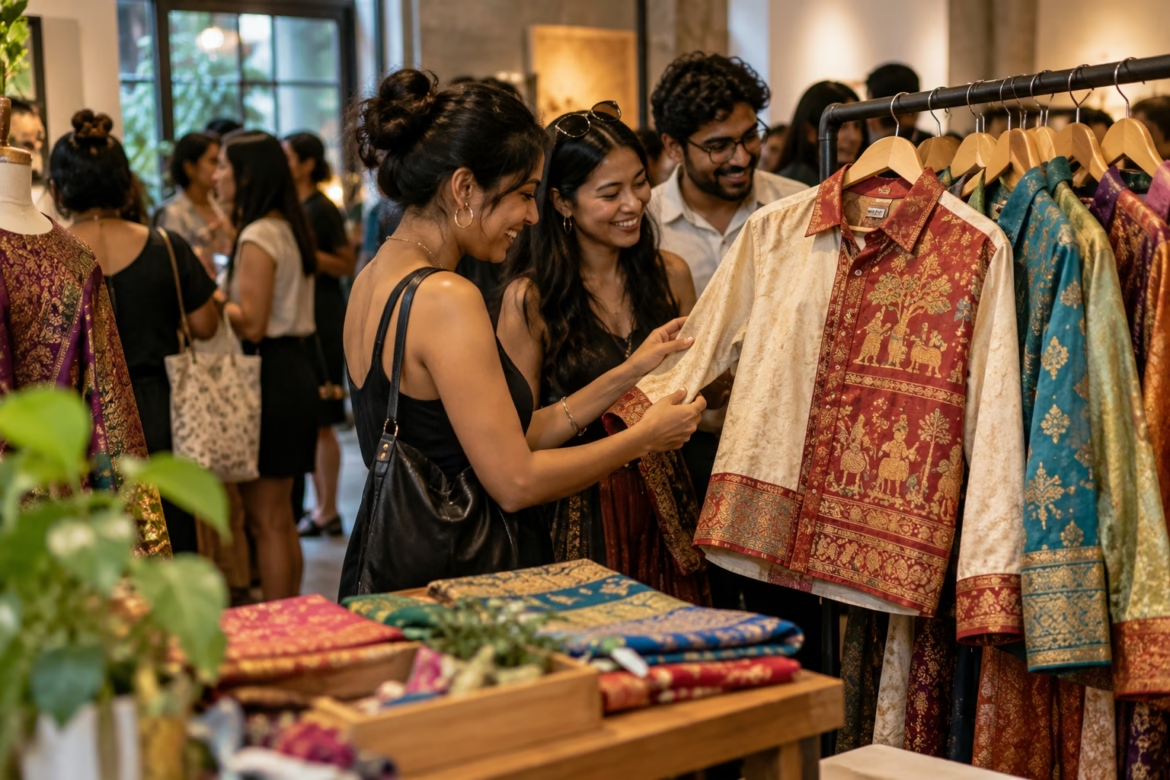
A Launch That Signalled Demand
When The Dori unveiled its first collection at One Trick Pony in Chinatown in July 2026, the room was filled beyond capacity. About 200 people attended the launch of 45 upcycled shirts, and two-thirds were sold that day. For a debut collection from a brand founded by three 27-year-olds with no formal fashion training, the turnout was not merely encouraging—it was a market signal. The Dori is part of a small but growing cluster of Singapore businesses treating unused saris as a design resource rather than sentimental clutter.
The Problem Hidden in Plain Sight
The founders’ insight was rooted in a familiar domestic reality. Fashion content creator Anisha Batra described the phenomenon succinctly: every Indian household has a cupboard where “beautiful saris live, folded away and waiting”. Saris worn to a wedding or a prayer ceremony are often perceived as too recognisable for repeat wear, and their formal construction makes them impractical for daily use. The Dori’s co-founder Rishabh Sharma founded the brand after hearing family friends describe how the probability of wearing a sari again drops significantly once their social circle has seen it. That insight transformed a cultural habit into a supply chain.
Design That Respects the Original Craft
The Dori’s design process is deliberately constrained by the material. The pallu—the ornamental end of the sari—anchors each shirt’s front or back panel, while borders are redeployed as cuffs and plackets. Because every sari carries different motifs and embroidery, no two shirts are identical. One shirt featured kantha embroidery from West Bengal depicting village life and sold within half an hour. This design approach does more than reduce waste; it reconnects younger consumers with Indian textile heritage while blending Singaporean and Indian influences, a goal the founders have articulated explicitly.
Beyond One Brand: A Small Ecosystem Forms
The Dori is not alone. The Niram Collective, founded by sisters Radha Kunasaigran and Sindhu B., launched in October 2025 and has sold over 150 upcycled pieces. Raja Rani, a circular fashion brand started in 2021 by Naveen Murugan and Beatrice Nannini, also operates in the ethnic-wear upcycling space. Together, these labels are building a niche that did not exist at scale five years ago. Their collective challenge is not consumer interest but supply consistency and pricing: upcycled saris require skilled labour, and the garments sit at a premium price point compared with mass-produced ethnic wear. The next phase of growth will test whether this model can expand without diluting the craftsmanship that makes it desirable.