A National Treasure Goes Digital
Singapore’s hawker culture, inscribed on UNESCO’s Representative List of the Intangible Cultural Heritage of Humanity, has long been celebrated as a cornerstone of the nation’s identity. The bustling centres—from Maxwell Food Centre to Newton Circus—represent more than mere dining venues; they are living repositories of culinary tradition, social cohesion, and affordable nourishment. Yet the same digital transformation reshaping every facet of Singaporean life is now reaching into these hallowed culinary spaces, creating both opportunities and tensions.
Startups Bridge the Gap Between Hawker Stalls and Office Workers
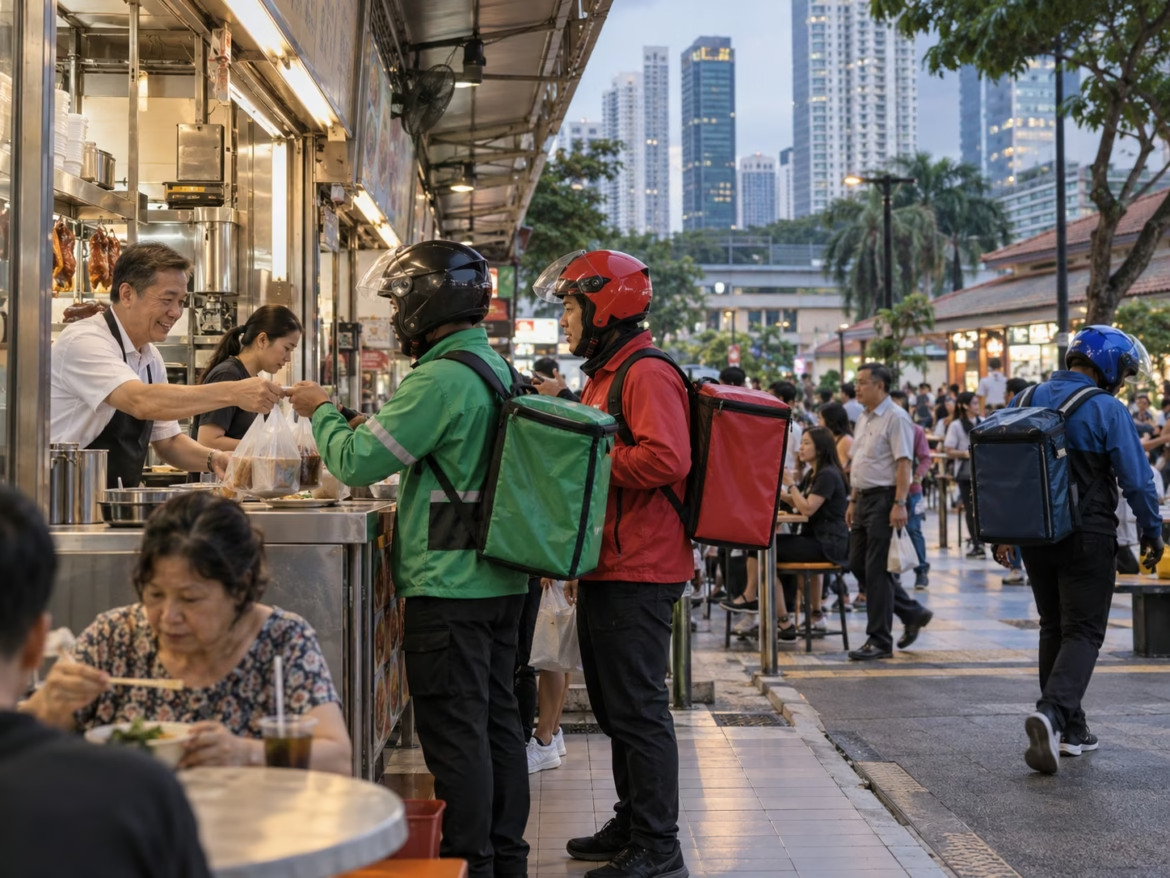
The emergence of dedicated hawker delivery services represents a significant development in this space. WhyQ, which debuted in October 2025, has established a niche by delivering food from 250 stalls across seven hawker centres in the CBD area, processing approximately 300 orders daily. The startup achieved baseline profitability in Singapore in Q2 2025 and has maintained an annualised revenue run rate of about S$5 million through Q1 2026. Operating exclusively during lunchtime in the CBD, WhyQ addresses a specific need: enabling time-pressed office workers to access hawker fare without the queue.
Similarly, local startup honestbee launched a weekday hawker food delivery service for the CBD area, operating from 11am to 2pm on Mondays to Fridays, with plans to expand islandwide.
The Cost Pressures Threatening Hawker Viability
Yet the digitalisation of hawker food occurs against a backdrop of mounting economic pressures. In April 2026, hawkers raised prices by up to S$1 as the Middle East conflict drove higher energy and ingredient costs, with industry players calling for government support including rental and utility rebates. For many hawkers operating on thin margins, the prospect of additional platform commissions—typically ranging from 15% to 30%—presents a significant barrier to participation.
Is Delivery Changing What Hawker Food Means?
A deeper question lurks beneath the operational challenges: does delivery alter the essential character of hawker cuisine? Hawker food is arguably at its best when consumed immediately—the char kway teow still smoking from the wok, the laksa broth at optimal temperature. The transit time inherent in delivery inevitably compromises these sensory qualities.
Yet the counterargument is equally compelling. For elderly residents with limited mobility, for parents managing young children, and for workers unable to leave their desks, delivery may represent the only viable access to hawker food. In this sense, digital platforms are not diminishing hawker culture but rather expanding its reach to those who might otherwise be excluded.
The Path Forward for Hawker Digitalisation
The Ministry of Trade and Industry has acknowledged the importance of supporting hawkers in this transition. Government programs such as Hawkers Go Digital have promoted mobile ordering and digital payment systems, making hawker food more accessible to a broader audience. The challenge lies in ensuring that digitalisation benefits hawkers themselves, not merely the platforms that intermediate their products.