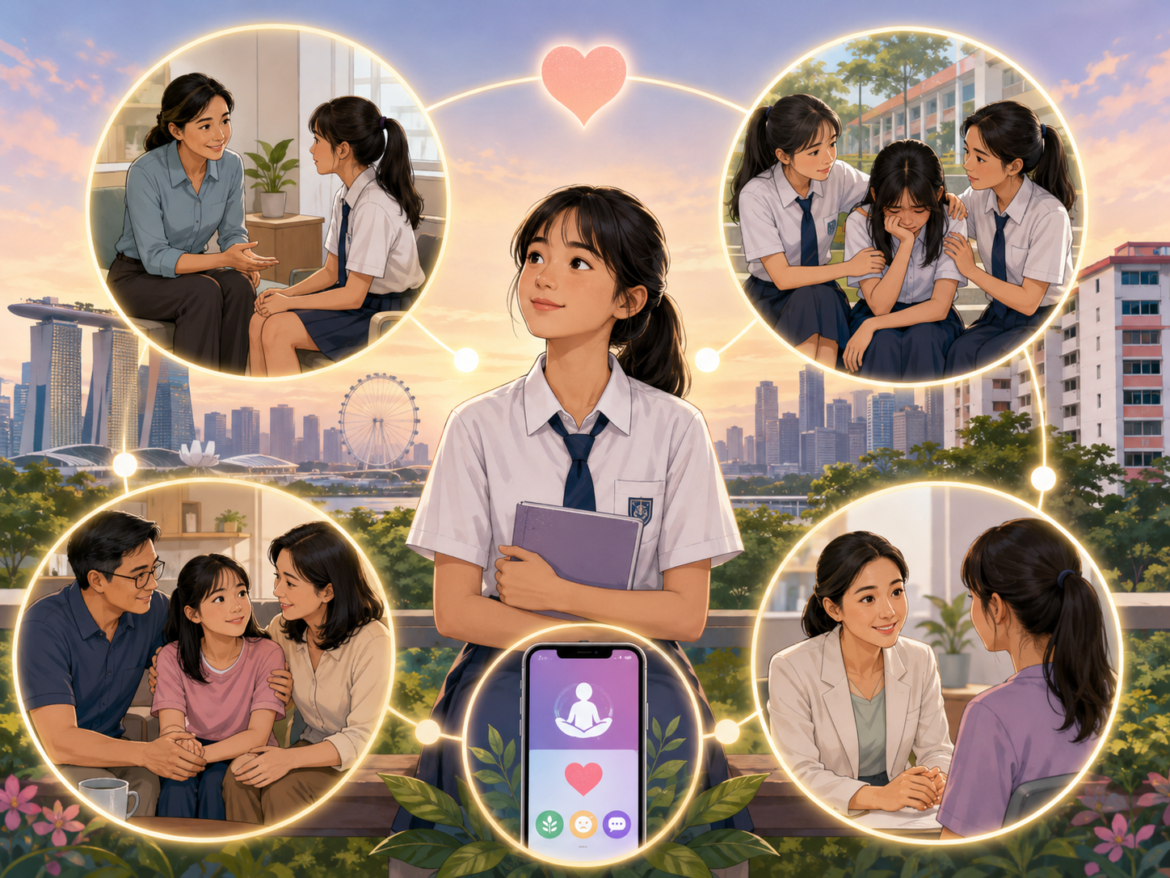
The mental health of teenagers in Singapore is shaped by many factors: academic pressure, family expectations, social comparison, online exposure, friendship difficulties, and the search for personal identity. Because these challenges are complex, Singapore’s response has moved beyond a narrow medical model. The country has been building a whole-of-society approach that includes schools, healthcare institutions, community programmes, parents, and digital resources.
A central part of this approach is prevention. Mental health problems are easier to address when signs are recognised early. In schools, students are taught skills related to emotional regulation, resilience, empathy, and responsible decision-making. These skills are often introduced through broader character and citizenship education. The goal is not only to help students perform academically, but also to help them understand themselves and manage life’s pressures.
School-based counselling is another important measure. Counsellors offer a safe space for students to discuss stress, sadness, anxiety, bullying, family problems, or other difficulties. Teachers also play a key role because they interact with students daily. When educators are trained to notice behavioural changes, they can connect students with help more quickly. This early response is especially important for teenagers who may not directly say that they are struggling.
Peer support has become increasingly valuable. Adolescents often turn first to friends when they feel upset. Singapore’s peer support initiatives encourage students to care for one another, listen respectfully, and alert trusted adults when a friend may be at risk. This builds a school culture where mental health is not treated as a private weakness but as something the community can support.
Healthcare and specialised services provide another layer of care. The Institute of Mental Health remains a key institution for psychiatric support, while youth-oriented services such as CHAT help young people access mental health checks and advice. REACH supports early assessment and intervention for students by connecting schools, families, and mental health professionals. Such programmes are important because they bring help closer to young people’s everyday lives.
National policies have also shifted toward better coordination. Singapore’s mental health strategy before August 2025 placed emphasis on early intervention, community support, destigmatisation, and improved service access. This matters for teenagers because mental health care can be confusing. A coordinated system makes it easier for a young person, parent, teacher, or doctor to know where to seek help.
Digital platforms are part of this ecosystem. Many teenagers are more willing to explore mental health information privately before speaking to someone. Tools such as mindline.sg can provide self-help exercises, information, and links to support. Used responsibly, such platforms can encourage young people to take their emotional well-being seriously.
Family education is also necessary. Parents may love their children deeply but still respond in ways that make distress worse, such as dismissing problems, comparing children with others, or focusing only on grades. Mental health literacy helps parents recognise warning signs and respond with patience. A teenager who feels emotionally safe at home is more likely to seek help early.
Despite these efforts, barriers remain. Stigma, fear of judgment, high expectations, and limited awareness can still prevent teenagers from speaking up. Some young people may also need more specialised or long-term care than basic school support can provide. Singapore’s progress depends on continuing to expand youth-friendly services, train more professionals, support families, and reduce the pressure that makes many teenagers feel they must always succeed. Mental health is strongest when young people feel seen, heard, and supported before they reach a breaking point.