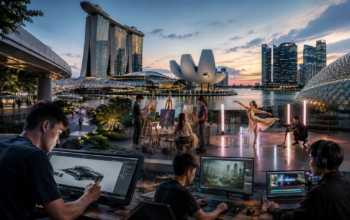
For many visitors, Singapore first appears as a polished metropolis defined by innovation and urban order. Yet behind that contemporary image lies a vibrant cultural landscape, especially in the field of visual art. The city has invested heavily in museums, public institutions, and gallery spaces that present everything from classical Asian artifacts to experimental contemporary exhibitions. For anyone interested in art, Singapore offers an experience that is both educational and inspiring.
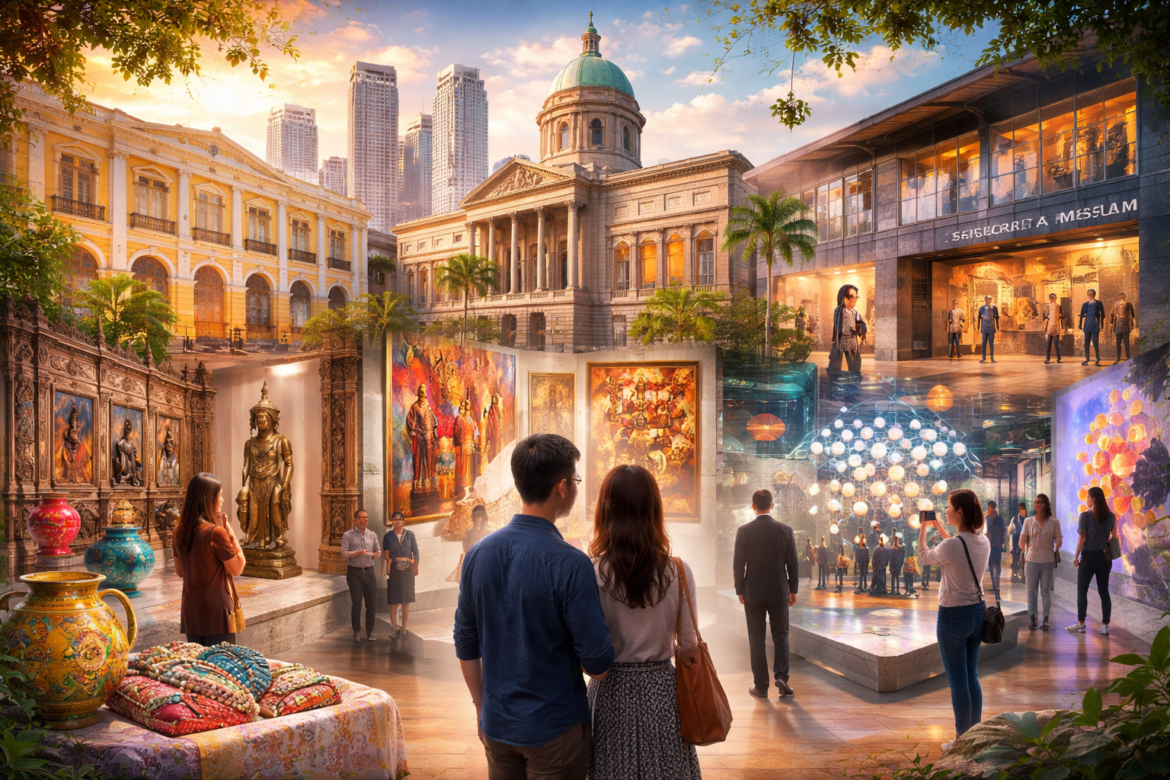
Among the city’s most significant institutions is the National Gallery Singapore, a museum that plays a major role in documenting the artistic development of both Singapore and Southeast Asia. Its collections are extensive, and its exhibitions are designed to help visitors understand how art has responded to social, political, and historical shifts across the region. Many of the works displayed explore themes such as colonial legacies, national identity, labor, community, and modern city life. The museum’s architecture also deserves attention. Housed in two restored national monuments, it creates a powerful dialogue between historic space and modern curatorship. This makes the visit meaningful even before one begins studying the artworks themselves.
The Singapore Art Museum is another essential destination, especially for those curious about contemporary expression. Its programming often moves beyond conventional painting and sculpture to include installations, time-based media, participatory projects, and immersive digital experiences. The institution has built a reputation for spotlighting artists who are not afraid to question social systems or test the boundaries of visual language. Exhibitions here often invite viewers to think critically rather than passively observe, making the museum particularly engaging for students, researchers, and culturally curious travelers.
Visitors who wish to understand Singapore’s multicultural foundations should not miss the Peranakan Museum. This museum presents the art and material culture of the Peranakan communities, whose heritage emerged through centuries of cultural mixing. Through elaborate clothing, furniture, ceremonial items, and decorative objects, the museum reveals a refined aesthetic tradition shaped by migration and adaptation. The exhibitions are rich in detail and offer insight into how identity is expressed through design, color, and craftsmanship. It is an ideal place to appreciate the artistic value of daily life and inherited custom.
The Asian Civilisations Museum adds a broader regional perspective to the experience. Rather than focusing on one nation, it traces artistic connections across Asia through collections of sculpture, ceramics, metalwork, textiles, and religious objects. Its exhibitions are particularly strong in showing how ideas, materials, and artistic forms circulated through trade routes and maritime networks. This is especially relevant in the Singaporean context, since the island has long served as a crossroads of commerce and culture. The museum helps visitors see art as a product of exchange, not isolation.
For a more current and flexible gallery experience, Gillman Barracks is highly recommended. This former military site has been transformed into a cluster of contemporary art galleries and creative spaces. The exhibitions here are often bold and globally connected, featuring work by emerging talents as well as internationally recognized names. Because the setting includes several galleries in one area, visitors can compare different curatorial styles and artistic approaches in a single trip. It is also one of the best places in Singapore to sense the energy of the commercial and independent art world.
What makes Singapore stand out as an art destination is the range of perspectives available in a relatively compact city. A single itinerary can include historical collections, heritage-based design, regional masterpieces, and boundary-pushing installations. These institutions do more than display beautiful objects. They provide frameworks for understanding history, identity, and the cultural exchanges that continue to shape Asia today. That depth is precisely why Singapore deserves recognition as one of the region’s most rewarding places for art exploration.