Singapore’s traditional drinks aren’t just refreshments—they’re a practical system built for heat, speed, and flavor, served everywhere from hawker centres to corner kopitiams. If you want the full experience, it helps to understand what’s in the cup, how it’s made, and how locals order without overexplaining.
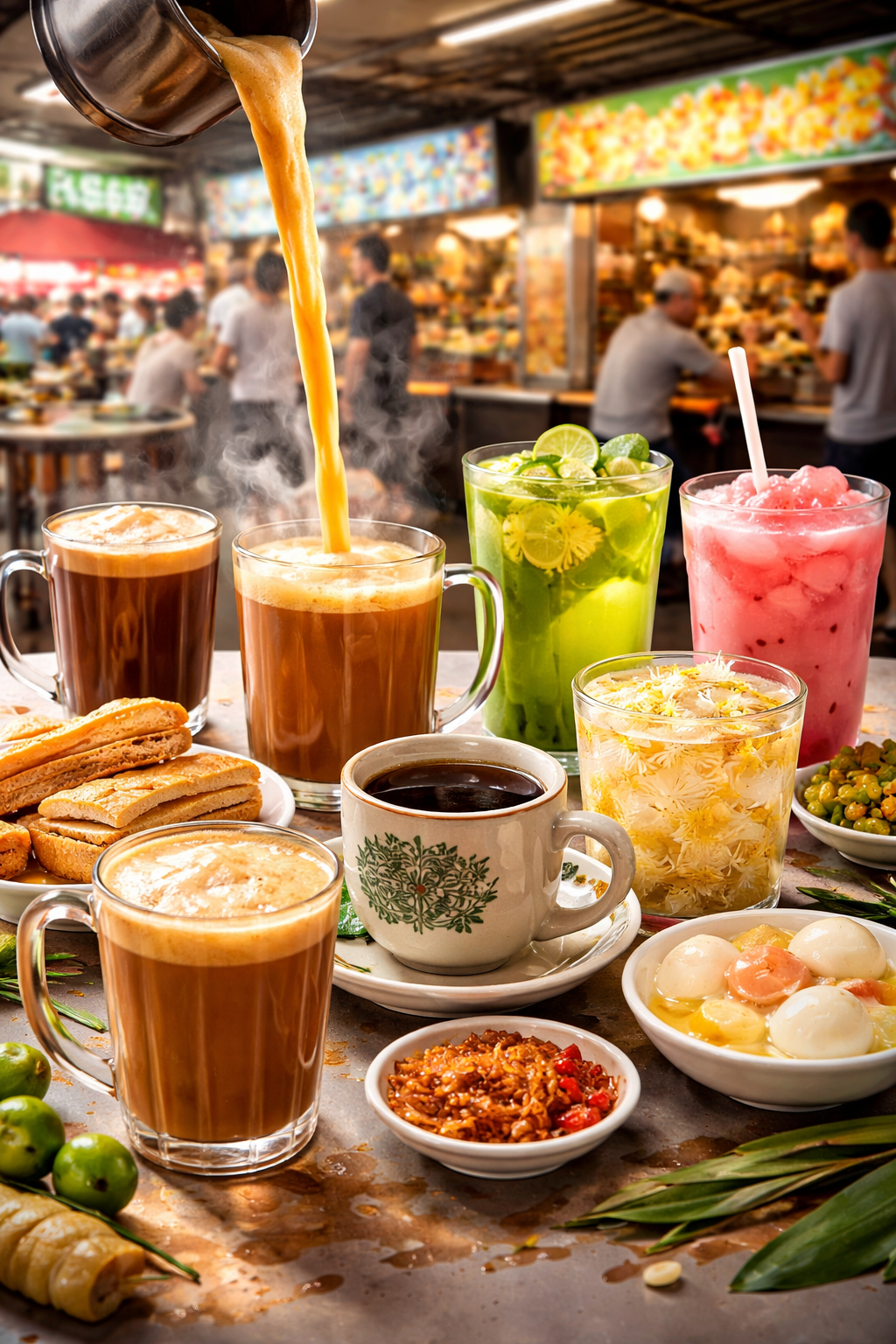
Start with teh tarik, often seen at Indian Muslim eateries and prata spots. This “pulled tea” combines strong brewed tea with sweetened condensed milk, then gets poured between containers in long arcs. The pulling forms foam and slightly cools the drink, giving it a smooth, silky feel. Taste-wise, it’s robust and sweet, with a toasty tea bitterness kept in check by milk. If you like warmth and spice, look for teh halia (ginger), which adds a fragrant kick that works especially well on rainy evenings or after a heavy meal.
Next is kopi, a category that can surprise visitors expecting café-style coffee. Traditional Singapore kopi is typically made from dark-roasted robusta beans—often roasted with sugar for caramelized depth, and sometimes with a little fat for sheen and aroma. The brewing method is classic: coffee grounds steep and strain through a cloth “sock” filter, producing a concentrated brew. That base is then customized into a whole family of drinks.
Here’s the local ordering logic in a simple way:
- Kopi = coffee + condensed milk (sweet, creamy)
- Kopi C = coffee + evaporated milk (less sweet, lighter)
- Kopi O = black coffee + sugar
- Kopi O Kosong = black coffee, no sugar
Then you can tweak strength and sweetness. “Gao” asks for it stronger; “di lo” means extra thick (less water); “siew dai” requests less sugar. With just a few words, you get a drink tuned to your taste.
Tea has similar shorthand. “Teh” is milk tea with condensed milk; “teh C” uses evaporated milk instead; “teh O” is tea with sugar but no milk; “teh O kosong” removes sugar too. This quick code is part of why kopitiams move so fast during breakfast and lunch rushes.
Singapore’s traditional drinks also shine in their non-coffee options, especially for cooling down. Barley water is widely loved—mild, lightly sweet, and almost neutral in the best way. It’s the kind of drink you gulp without thinking when the weather feels like a sauna. Chrysanthemum tea is more aromatic, made from dried chrysanthemum flowers, often served chilled. It can taste gently floral and soothing, and it’s common both freshly brewed and sold in ready-to-drink bottles.
If you want something with deeper roots in traditional wellness culture, try Chinese herbal tea (liang cha). These blends vary by stall: some are bitter and earthy, others are balanced with sweetness. Drinks like tortoise jelly—a chilled herbal jelly served with syrup—are popular for those who enjoy a bittersweet profile and a dessert-like texture with medicinal origins.
For fresher, plant-based sweetness, sugarcane juice is a must. Vendors feed cane stalks into a press and collect the pale green juice immediately. The result is bright, sweet, and grassy, sometimes with a squeeze of lime to sharpen it. Another nostalgic favorite is bandung, which mixes rose syrup with milk for a fragrant pink drink often associated with Malay food stalls and festive meals.
To build a “local” tasting route, pair drinks with what Singaporeans commonly eat. Kopi or teh matches perfectly with kaya toast, butter, and soft-boiled eggs in the morning. With spicy dishes at lunch, sugarcane juice and barley water feel especially satisfying. Late at night, a frothy teh tarik beside a plate of prata turns into a full-on ritual.
The best way to learn is to order, listen, and repeat. Once you can say “kopi c siew dai” without hesitating, you’ll feel the rhythm of Singapore’s drink culture—and you’ll taste how tradition stays alive in everyday cups.