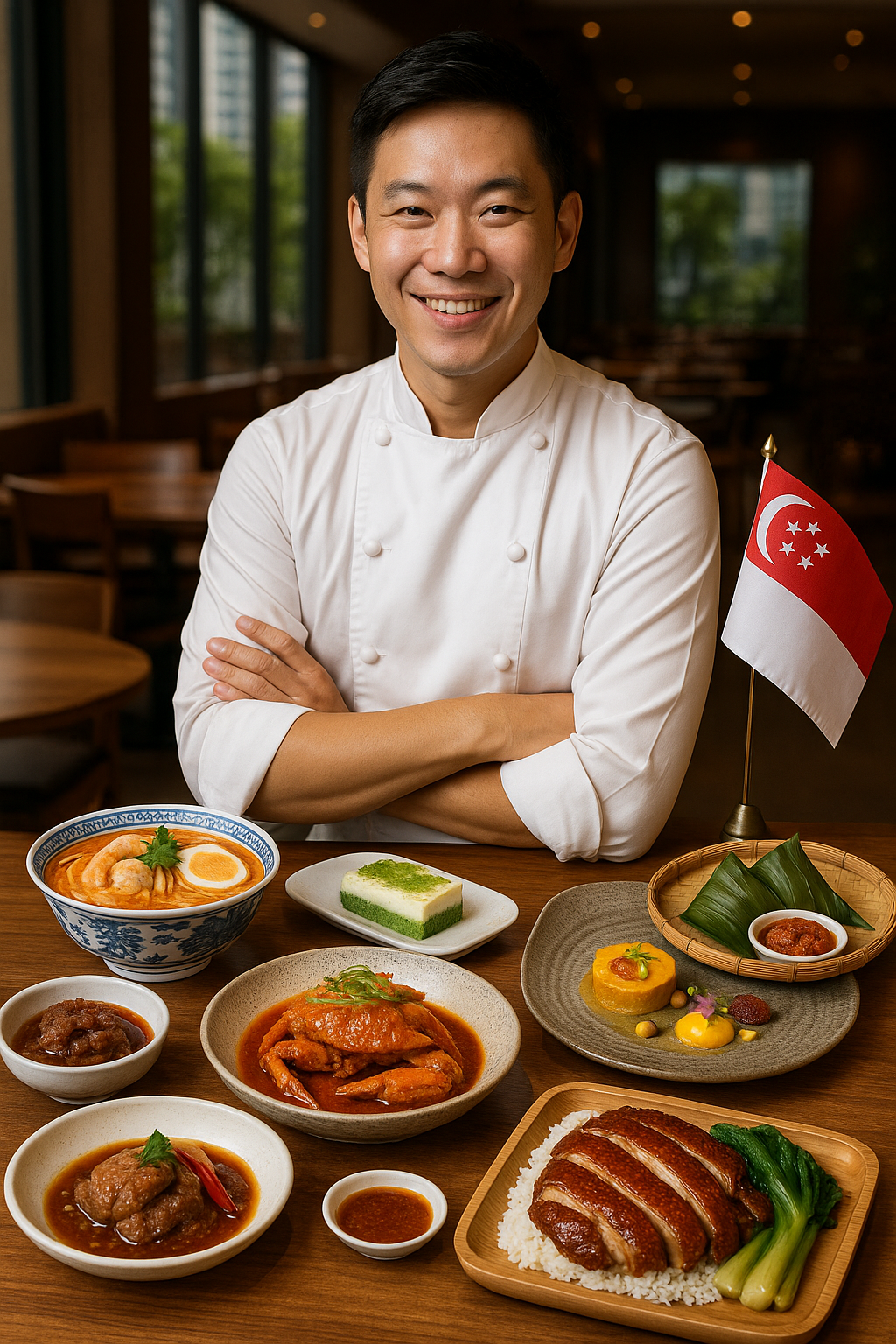
Singapore’s culinary reputation was once anchored mainly in its hawker centers, beloved by locals and backpackers. Over the past two decades, however, a new wave of chefs has transformed that perception. Today, Singapore is seen as a city where world-class fine dining stands shoulder to shoulder with legendary street food, and its chefs are central to this transformation.
At the high end of the spectrum, André Chiang played a pivotal role in putting Singapore on the map. His eponymous Restaurant André in the historic Bukit Pasoh area drew international food travellers and journalists. Its tightly curated tasting menus and distinctive “octaphilosophy” showcased a meticulous, almost poetic approach to food. Even after the restaurant’s closure, Chiang’s influence lives on through chefs he mentored and through the global recognition he brought to the city.
The story of Hawker Chan provides an illuminating contrast. Chef Chan Hon Meng’s soy sauce chicken attracted long queues long before the Michelin Guide arrived in Singapore. Once awarded a star, his stall became a symbol of culinary democracy: a meal deemed worthy of the world’s top restaurant guide at a price accessible to ordinary diners. Global media celebrated this story, and international branches under the “Hawker Chan” brand soon appeared, spreading a piece of Singapore’s hawker culture abroad.
Chefs like LG Han have embraced the challenge of translating hawker heritage into modern gastronomic language. At Restaurant Labyrinth, diners encounter playful interpretations of familiar dishes: a “chilli crab” that looks nothing like its original form, or a “Hainanese chicken rice” distilled into new textures. These creative reinterpretations are not gimmicks; they are carefully researched, often involving collaboration with local farmers and producers. The result is a form of cuisine that respects tradition while pushing it in new directions, catching the attention of international food guides and media.
Heritage remains a powerful driver for many Singaporean chefs. Malcolm Lee’s work at Candlenut demonstrates how Peranakan flavors can be lifted into a refined, contemporary context. Dishes like curry, sambal-based preparations, and rich stews are served in an environment that matches any modern restaurant in the world, without sacrificing the warmth and nostalgia associated with home-cooked Peranakan meals. International diners often discover this hybrid Chinese-Malay culture through his menus, making the restaurant a quiet but influential cultural bridge.
Pastry chef Janice Wong occupies a different, yet equally important niche. Her dessert-focused spaces and artistic installations attract attention from design enthusiasts as much as food lovers. By treating chocolate, sugar, and other ingredients as both medium and subject, she encourages people to reconsider what dessert can be. Her presence at global events and collaborations with international brands ensure that Singaporean creativity is also recognized in the world of sweets.
Beyond individual restaurants, Singaporean chefs contribute to culinary education and cross-border dialogue. Many are invited to cook at foreign restaurants for limited-time collaborations or to speak at gastronomy conferences. In these settings, they introduce ingredients like pandan, calamansi, and sambal to chefs and diners who may never have encountered them. At the same time, they return with new techniques and perspectives, from Nordic fermentation methods to Latin American approaches to local sourcing.
Through these intertwined stories—of hawker icons, fine-dining pioneers, and avant-garde pastry artists—Singapore’s chefs have reshaped how the world views the city’s food. They demonstrate that excellence can arise from a stall, a tasting menu, or a dessert gallery, and that a small nation can exert an outsized influence on global culinary trends.