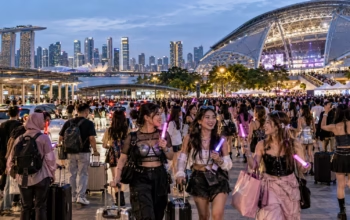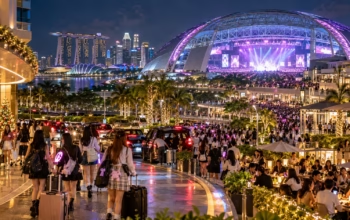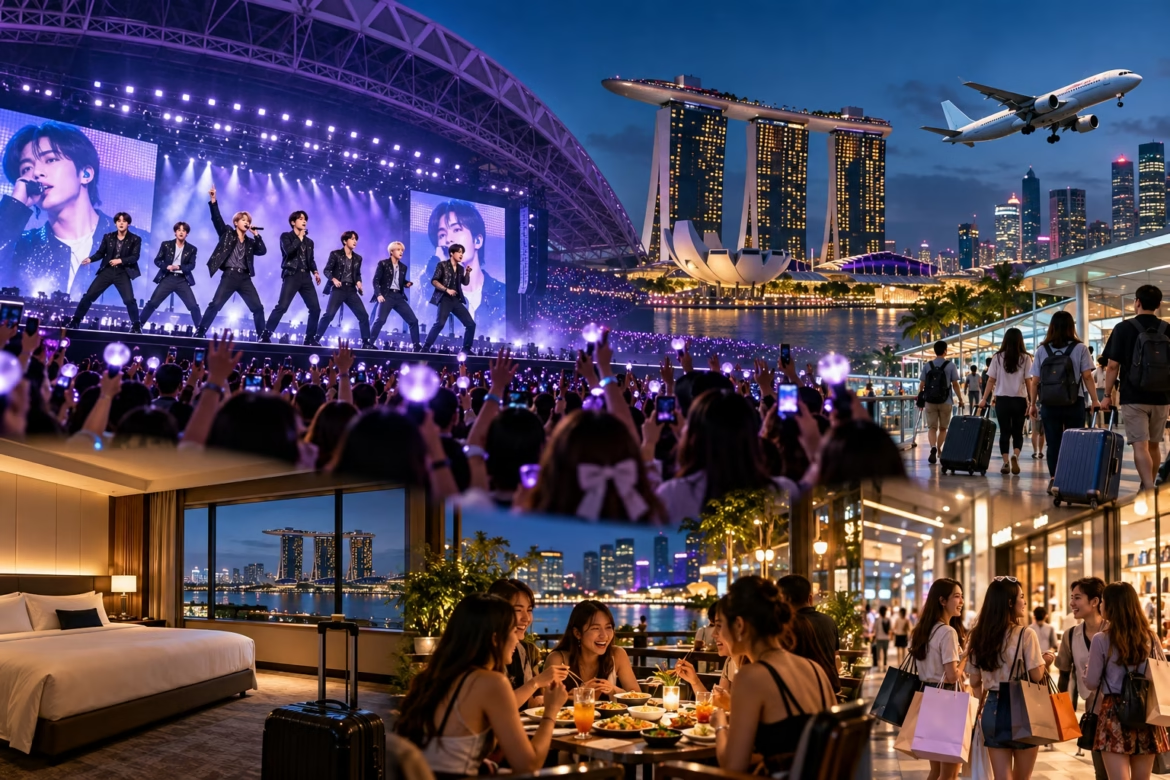
Exclusive concert deals attract headlines, but they collapse without a venue capable of absorbing the operational complexity that comes with a multi-night, regionally significant residency. In Singapore, that venue is The Kallang, the precinct formerly known as the Singapore Sports Hub, which was rebranded in November 2025. Its centrepiece is the 55,000-capacity National Stadium, supported by the 12,000-capacity Singapore Indoor Stadium and a surrounding open concourse that allows the two venues to function as a single mega-event machine .
A Precinct Built for Multi-Night Residencies
The National Stadium is not merely large; it is configurable. It features the world’s largest free-spanning dome and a retractable roof, making it one of the few venues in the world capable of hosting football, rugby, cricket, athletics and concert configurations without abandoning its core event calendar . For concert promoters, the retractable roof is a weather-risk hedge, but the more important advantage is the precinct’s ability to spread arrivals across multiple venues and open spaces. When BTS performed at the National Stadium in 2019, they became the first K-pop act to sell out the venue; when they return in December 2026 for four nights, the operational team will draw on systems refined through six-night runs by Taylor Swift and Coldplay, a three-night Bruno Mars engagement and Lady Gaga’s four-night exclusive Asia stop in 2025 .
The Operational Intelligence Behind the Exclusivity
Mitch Seeto, head of all venue operations at The Kallang, has described the BTS return as one of the most operationally complex concerts ever staged at the precinct. His team has studied footage of BTS’s Goyang concerts in South Korea not as fans but as venue operators, observing crowd flow, staging logistics and ingress-egress patterns . That level of preparation is a competitive asset in its own right. Exclusive Asian stops are awarded to cities that can demonstrate not just capacity but predictability—the ability to move tens of thousands of international fans through a precinct without degrading the experience or overwhelming surrounding infrastructure.
The Capacity Ceiling and the Exclusivity Trade-Off
The National Stadium’s 55,000-seat concert configuration is large by regional standards, but it is not unlimited. The record concert attendance at the venue stands at 63,000, which indicates that promoters can push capacity beyond the standard seated configuration for the right artist . That flexibility matters for exclusivity negotiations: a promoter weighing whether to make Singapore the only Southeast Asian stop needs confidence that the venue can accommodate enough nights to justify the exclusivity premium. The Kallang’s answer is a multi-night model rather than a single-record-breaking night—four BTS shows, six Taylor Swift shows, six Coldplay shows—each calibrated to regional travel patterns and fan willingness to book cross-border trips.
What the Venue Strategy Does Not Solve
Infrastructure solves throughput, not demand creation. The Kallang precinct can host the shows, but it cannot manufacture the regional fan base or the discretionary income that fills the seats. Singapore’s live entertainment market was worth USD 1.29 billion in 2025 and is forecast to reach USD 2.08 billion by 2034, growing at a 5.47% CAGR between 2026 and 2034 . That growth trajectory supports the venue investment case, but it also invites regional competition. Malaysia is actively lowering regulatory and cost barriers for international acts, and Kuala Lumpur’s Bukit Jalil stadium offers an 80,000-capacity alternative that could dilute Singapore’s exclusivity leverage over time . The Kallang’s advantage is not permanent; it is a lead that must be defended through operational reliability, artist relationships and the broader tourism ecosystem that surrounds the venue.