The Data That Changes Everything
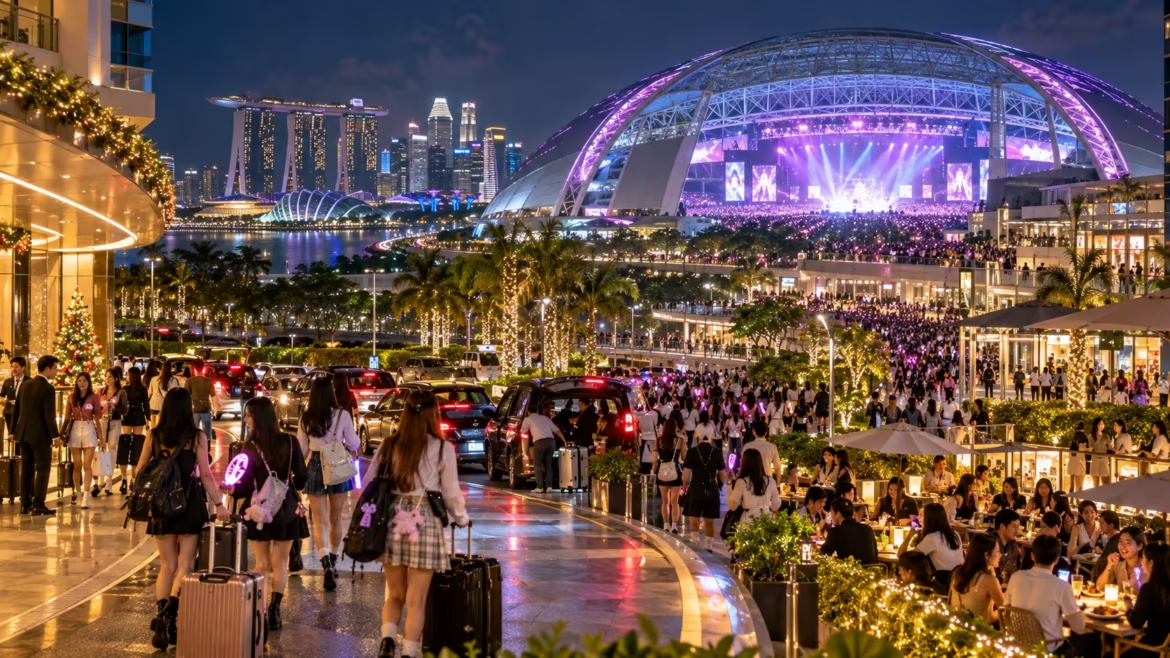
More than six in ten consumers across Australia, Hong Kong, Indonesia, Singapore, and Thailand have attended a live concert or music festival. But the more consequential figure from YouGov’s Following the Music: APAC Concert Goers Report 2026 is this: 59 percent have travelled specifically to watch live music. Cross-border concert attendance has moved beyond niche fandom into mainstream travel behavior. And the journey rarely ends at the venue. Most concert travellers who extend their trips add several days for sightseeing, dining, and shopping—with more than half saying the concert made them more interested in the host city.
Singapore’s Value-Intensive Advantage
Singapore does not compete on attendance volume alone. It competes on economic yield per visitor. LPEM-FEB UI research comparing Coldplay’s concerts in Jakarta and Singapore found that Singapore generated approximately USD1,030 in output per spectator, versus roughly USD680 per person in Indonesia. Taylor Swift’s exclusive Singapore shows pushed that figure to about USD1,449 per attendee. This is not accidental. It reflects stronger integration of tourism infrastructure, international mobility, and premium service sectors—a structural advantage that smaller markets with high-spending visitors can replicate.
The Three-Day Fan Economy
A concert ticket is merely the entry point. The transaction quickly expands into airfare, airport transfers, accommodation, meals, local transport, merchandise, and pre- or post-show leisure spending. The hotel captures the room night, the airline captures the journey, restaurants capture meals, and attractions capture the additional leisure hours. This distributed value chain is why tourism authorities increasingly treat major music events as destination assets rather than isolated entertainment products.
The Cost Barrier Paradox
Despite the boom, cost remains the leading constraint for non-attendees, particularly in Australia and Singapore. Ticket prices and total attendance costs limit frequency, which means each concert trip carries higher stakes for both the fan and the destination. Fans who do travel are more likely to maximize the experience—staying longer, spending more, and engaging more deeply with the host city.
What This Means for 2026 and Beyond
The World Economic Forum projects the international live events and sports sector will grow by about 16 percent annually to reach US$2 trillion by 2030, driven largely by millennials and Gen Z. Singapore’s concert calendar for 2026—featuring The Weeknd, BIGBANG, Guns N’ Roses, and BTS—positions the city-state to capture a disproportionate share of that growth. The strategic question is no longer whether concerts drive tourism, but how aggressively destinations should compete for exclusive regional stops.