Timezone’s Arkadia Arena: A Multiplayer VR Hub
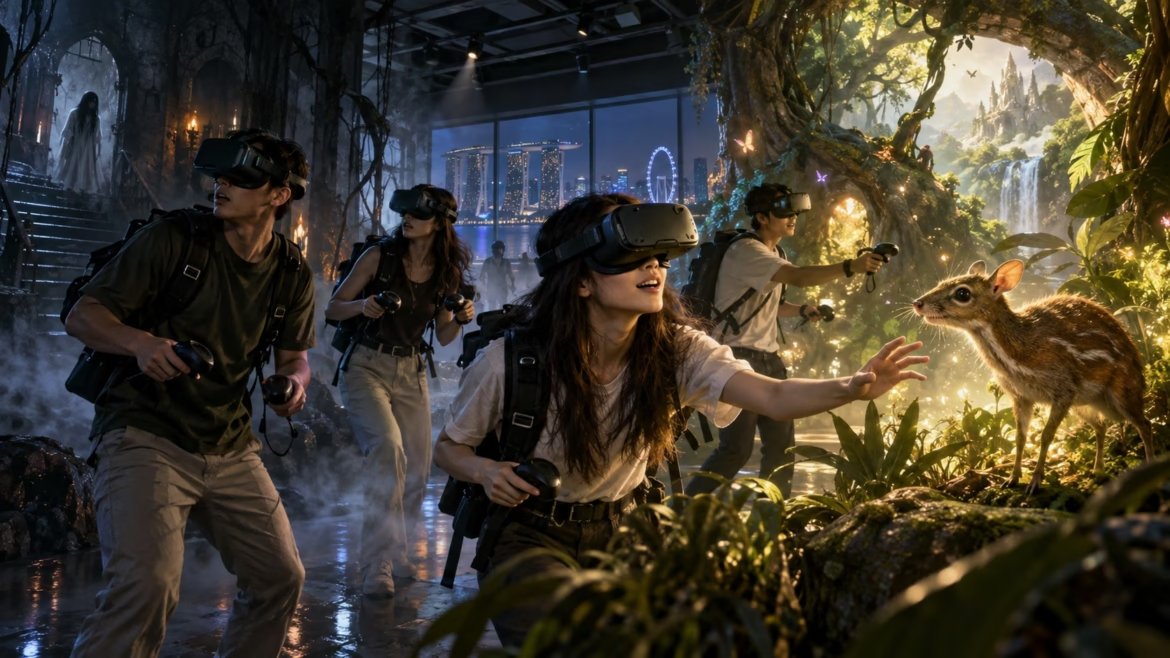
The arcade has always been a social space, but virtual reality is rewriting what social gaming looks like in Singapore. Timezone Orchard Xchange, located in the heart of the city’s premier shopping belt, now houses more than 160 attractions and games, including a dedicated VR arena designed for multiplayer engagement. The Arkadia VR Arena accommodates up to six players simultaneously, offering immersive VR experiences within a shared physical space. This configuration transforms VR from a solitary activity into a group event, positioning the arcade as a destination for friends, families, and corporate teams. The broader Timezone network has expanded its VR offerings across multiple locations, including Waterway Point in Punggol and SC VivoCity, where simulation equipment, music games, and virtual reality experiences sit alongside traditional arcade staples.
Hologate and the Rise of Competitive VR
Beyond the arcade chains, specialised VR entertainment providers are carving out distinct niches. Hologate, available at selected venues in Singapore, offers a compact but high-intensity VR gaming format with titles such as Zombyte, Rig Rebels, Cold Clash, and Angry Birds. The Hologate system is designed for short, repeatable sessions, making it accessible to casual players while still delivering the spatial tracking and motion feedback that define premium VR experiences. This model—standardised hardware, curated content, and rapid turnover—has proven effective in introducing VR to audiences who might not otherwise seek it out. The competitive dimension is equally important: leaderboards, timed challenges, and multiplayer modes create a social incentive structure that extends beyond the novelty of the technology itself.
Family-Friendly VR at Playon Park
For families and younger audiences, Playon Park at Downtown East offers a different entry point into immersive entertainment. The venue combines indoor sports with VR playground elements, featuring 26 experiences across five zones, including full-motion racing simulators, large-space VR environments, bowling, and boxing. The integration of physical activity with digital overlays reflects a growing trend in Singapore’s entertainment landscape: the blurring of the boundary between video games and physical recreation. Sentosa’s DinoVenture VR experience follows a similar logic, offering a dinosaur-themed VR adventure that appeals to children and adults alike. These family-oriented offerings are crucial for market expansion, as they establish VR as a routine leisure activity rather than a specialised hobby.
The Economics of Arcade VR
The arcade VR model in Singapore benefits from a favourable cost structure. Unlike location-based VR venues that require custom-built environments and long development cycles, arcade VR relies on standardised hardware and licensed content. This reduces operational complexity and allows venues to refresh their offerings more frequently. The Singapore Location-Based Entertainment Market, which reached USD 226.18 million in 2025, is projected to grow to USD 534.69 million by 2034, with VR theme parks and arcades representing a significant segment of that expansion. The presence of established players like Timezone, alongside specialised operators such as Hologate and Playon Park, indicates a maturing ecosystem. For consumers, the result is a diverse landscape of VR experiences ranging from competitive multiplayer shooters to family-friendly adventures—all within a short MRT ride of one another.