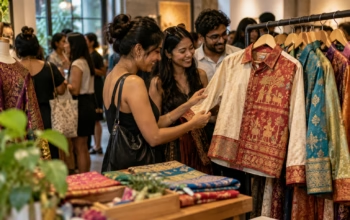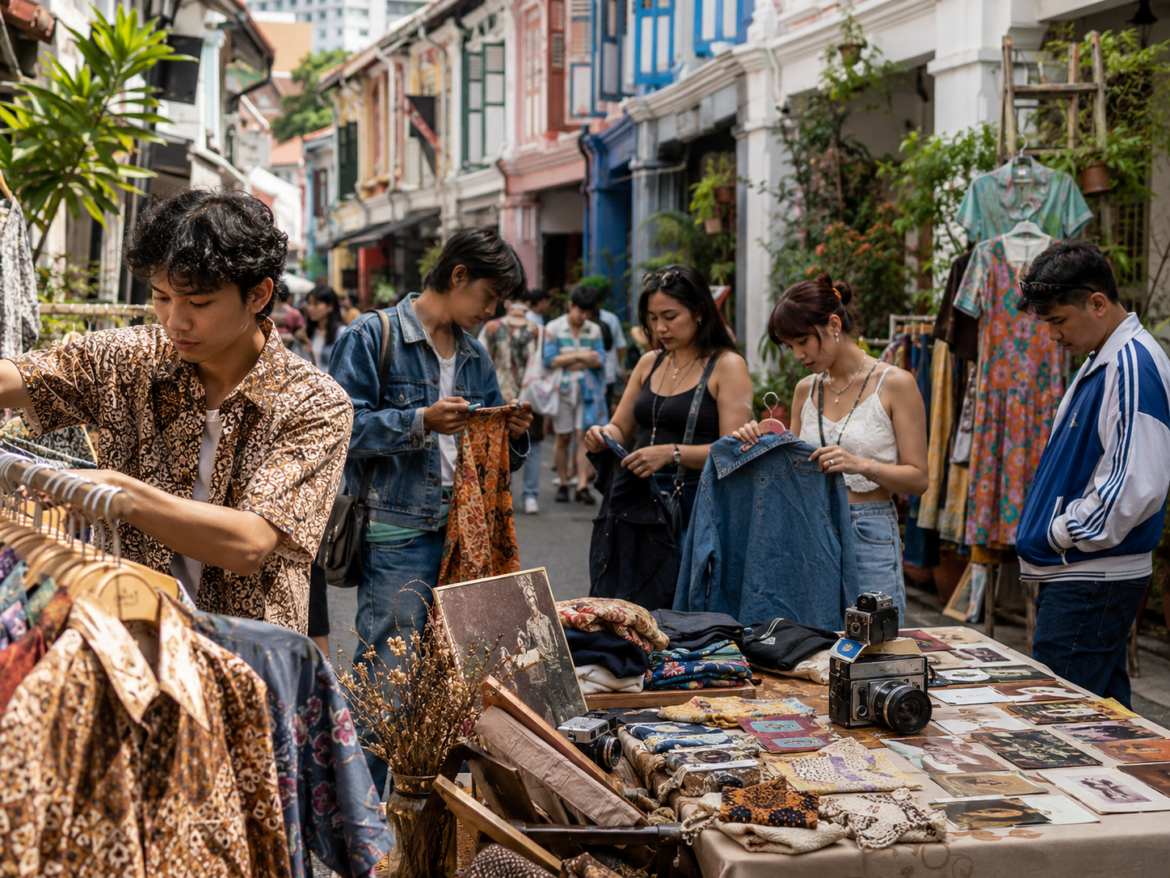
Walking through Bugis or Orchard Road in 2026 is like flipping through a late 20th-century fashion magazine. Young Singaporeans mix authentic Y2K baby tees with 1990s minimalist blazers, and increasingly, they are hunting for vintage Singapore-made labels. The result is a retro movement that is global in reference but distinctly local in execution.
The Y2K Revival Matures
Y2K fashion has evolved from a TikTok novelty into a sophisticated collecting category. Shoppers now source authentic early 2000s pieces from brands such as Miss Sixty, Baby Phat and local mainstay M)phosis. According to Vogue Singapore’s 2026 vintage trend report (vogue.sg), searches for “Y2K vintage Singapore” grew 58 percent year-on-year. Buyers are prioritising original fabric blends, era-correct hardware and intact tags over mass-produced reproductions.
How Singapore’s Y2K Look Differs
In Singapore, Y2K vintage often incorporates elements from early 2000s Asian pop culture. Shoppers hunt for metallic fabrics, asymmetrical hems and graphic tees referencing local music and television from the period. Stylists point out that the humid climate pushes the trend toward breathable mesh layers and cropped silhouettes, creating a tropicalised version of the global aesthetic. This local adaptation gives Singapore’s Y2K revival a distinctive character.
90s Minimalism as a Counter-Trend
Running parallel to the loud Y2K revival is a quieter obsession with 1990s minimalism. Clean lines, neutral palettes and tailored separates from brands like Jil Sander, Helmut Lang and local label Song & Kelly are highly sought after. This trend appeals to working professionals who want vintage clothing that integrates seamlessly into corporate wardrobes. A well-cut 1990s blazer in black or beige can anchor a modern office outfit without looking like a costume.
The Local Label Renaissance
Perhaps the most significant shift in 2026 is the renewed interest in vintage Singapore-made labels. Brands like Celia Loe, Projectshop and early local streetwear labels are gaining recognition among younger consumers. These pieces were often produced in small batches, making them rare and difficult to find. Thrift stores and online communities now highlight local labels with dedicated tags and educational posts. This local turn gives Singapore’s vintage trend a deeper cultural anchor than purely Western-centric nostalgia.
Styling Vintage for the Present
Stylists recommend mixing one statement vintage piece with contemporary basics. A 1990s minimalist blazer can be paired with modern trousers; a Y2K mesh top works over a simple tank. The key is to respect the original garment’s cut and fabric rather than forcing it into current trends. This approach has made vintage fashion in Singapore less about costume and more about personal style, allowing wearers to express both taste and cultural awareness.
As more young Singaporeans document their retro outfits online, the line between archival fashion and everyday street style continues to blur, ensuring these trends will evolve rather than fade.